
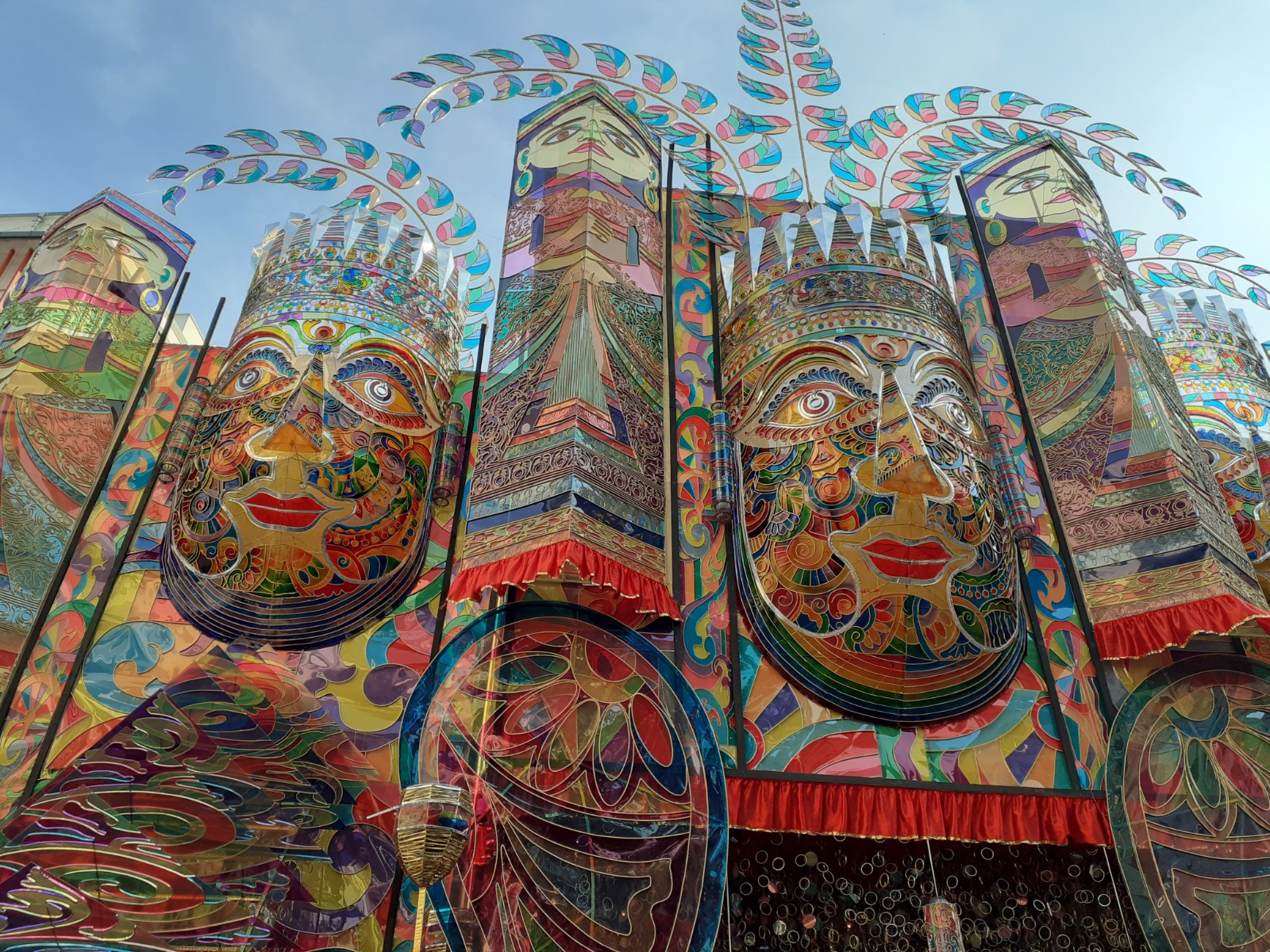
TCG CREST invites applications for
Access to Research at CREST (ARC) in
Applied Humanities
An 8-week hands-on research programme introducing students to research in the Humanities that will also simultaneously rethink the place and purpose of the Humanities.
Applications for the ARC Programme are now closed. Details for the next cycle will be announced soon.

Programme Overview
Designed as an entry point into research in the Humanities, the programme introduces students to emerging critical tools shaping the next generation of humanistic inquiry. It will also mentor the development of individual research projects anchored around a shared thematic focus.
Faculty
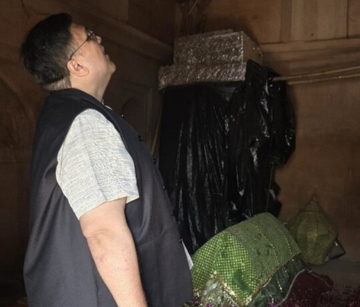
Projit Bihari Mukharji
Dean and Professor, SHSS, TCG CREST
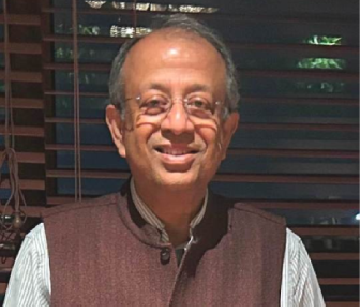
Jayanta Sengupta
Professor, SHSS, TCG CREST
Former Director, Alipore Museum, Kolkata; Former Director of the Victoria Memorial Hall, Kolkata
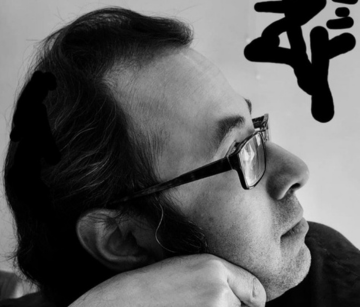
Sraman Mukherjee
Associate Professor, SHSS, TCG CREST
Moinak Biswas
Visiting Faculty
Professor of Film Studies at Jadavpur University, Kolkata
Dr. Sebastian Schwecke
Visiting Faculty
Founding Director of the Max Weber Forum for South Asian Studies, New Delhi
Upal Chakrabarti
Visiting Faculty
Associate Professor of Sociology at Presidency University, Kolkata
Dr. Suddhaseel Sen
Visiting Faculty
Associate Professor in the Department of Humanities and Social Sciences at the Indian Institute of Technology Bombay
Dr. Gaurav Garg
Assistant Professor of History in the Department of History at Ashoka University
Aparna Vaidik
Professor of History, Ashoka University
Sukanya Sarbadhikary
Visiting Faculty
Associate Professor, Department of Sociology, Presidency University
Research Focus
Historicizing interdisciplinarity
Rethinking the role and mandate of humanistic inquiry
Transcending established academic silos
The programme is primarily intended for current undergraduate students
and recent graduates in the Humanities and Social Sciences. Applications
from graduate students and early-career researchers may also be considered,
subject to the availability of seats after accommodating undergraduate
participants.
public presentation of research
PhD students, Early Career Researchers
Completion from TCG CREST (Deemed to
be University under UGC Act, 1956)
Application Process
- Complete the Application Form
- Admissions Decision
SUPPORT AT THE TCG CREST
Selected participants will receive a fellowship.
Guidance on accommodation options will be provided for outstation participants.
Please reach out to us at [email protected] for further queries on the ARC programme.
Apply Now
Projit Bihari Mukharji
Dean and Professor, SHSS, TCG CREST
Projit Bihari Mukharji is a historian of science, specializing mainly in the histories of medicine, biology, and psychology, in modern South Asia. He has authored three monographs and dozens of articles in some of the foremost international journals. Amongst his books are Nationalizing the Body (London, 2009), Doctoring Traditions (Chicago, 2016) and Brown Skins, White Coats (Chicago, 2023) which won several prizes including the prestigious Pfizer Award. Before joining TCG-Crest, Mukharji taught for two decades in universities in the UK, Canada and the USA. This included over a decade at the University of Pennsylvania. His research was supported and recognized at various points by the SSHRC, Canada, Wellcome Trust, UK, and the NSF, USA. Mukharji has also been a Guggenheim Fellow.
Trained within the Subaltern Studies tradition, Mukharji’s main research interest is in tracing issues of marginalization within and through processes of knowledge-production. He has explored themes ranging from the work of lower-level South Asian physicians in the colonial medical service, the marginalization of therapeutic practices like nadipariksha (traditional pulse-reading), and the reframing of racial difference through human genetics. Lately, he has been working on the histories of parapsychology, model organisms, and anthropology. Currently, Mukharji also serves as the Co-Editor of Isis, the official journal of the History of Science Society. Over a century old, the journal counted eminent Bengali chemist-and-historian,
Sir PC Ray, amongst the members of its founding editorial group. Mukharji is keen to hear from students interested in researching any aspect of the history of knowledge-making in modern South Asia.
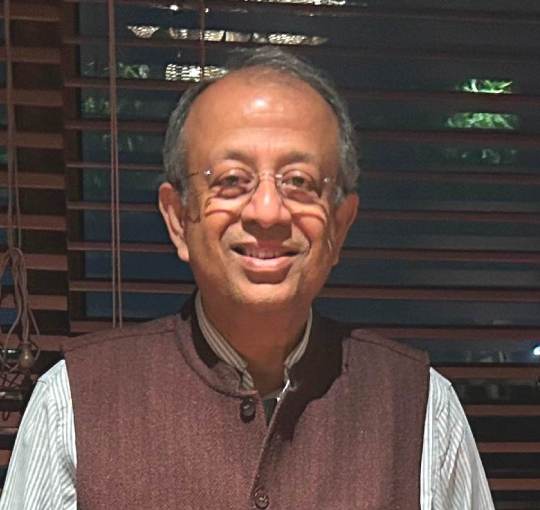
Jayanta Sengupta
Professor, SHSS, TCG CREST
Former Director, Alipore Museum, Kolkata; Former Director of the Victoria Memorial Hall, Kolkata
Jayanta Sengupta is a historian of modern India whose career has moved between the academy and the museum, between the production of scholarly knowledge and its translation into public narratives. Educated at Presidency College, Kolkata, and the Universities of Calcutta and Cambridge, he taught History for over two decades at Jadavpur University and the University of Notre Dame, and held visiting appointments at the Universities of Cambridge, Pennsylvania, Heidelberg, Utah State, Exeter, and Calcutta. In 2013 he turned to the museum profession, serving successively – and often concurrently – until 2026 as Director of the Victoria Memorial Hall, the Indian Museum, the Anthropological Survey of India, and the Alipore Museum, Kolkata.
Sengupta is the author of At the Margins: Discourses of Development, Democracy and Regionalism in Orissa (Oxford, 2015) and Those Noble Edifices: The Raj Bhavans of Bengal (Kolkata, 2019), as well as two volumes of essays in Bengali – Itihās o Samosamay: Samāj Sanskriti Rājniti [‘History and the Present: Reflections on Society, Culture, and Politics’] (Kolkata, 2022) and Hensheldarpan: Bāngālir Hānrir Khobor [‘Through the Kitchen’s Looking Glass: The Alimentary Aspects of Bengal’s History’] (Kolkata, 2023). He is also co-editor of The Long History of Partition in Bengal: Event, Memory, Representations (New York and London, 2024). His recent articles have appeared in The American Historical Review, Modern Asian Studies, Global Food History, and the Times Literary Supplement. He is currently completing two books – An Indian Critique of the United States in the Progressive Era: Bhupendranath Datta’s ‘My Experiences of America’ and Nation on a Platter: Food, Culture, and Politics in Bengal and the South Asian World – and writes a regular opinion column for The Telegraph, Kolkata.
His current research spans cultural practices in modern India, the culture and politics of food and eating, transnational and comparative intellectual history, public history and museums, and the entanglements of colonialism, nationalism, democracy, and authoritarianism in modern South Asia. He welcomes enquiries from prospective students wishing to pursue research in any of these areas.
Sraman Mukherjee
Associate Professor, SHSS, TCG CREST
Sraman Mukherjee is Associate Professor in the School of Humanities and Social Sciences at TCG CREST, Kolkata. Trained as a historian of colonial and postcolonial South Asia, at Presidency College, University of Calcutta, and Centre for Studies in Social Sciences, Calcutta, his research interests cover histories of art and heritage across colonial Bihar, Orissa, and Bengal, modern biographies of archaeological monuments, visual cultures of modern and contemporary Buddhism across South and mainland Southeast Asia, and cultural histories of social clubs and hotels.
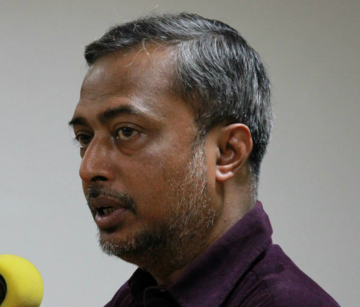
Moinak Biswas
Visiting Faculty, ARC Programme, TCG CREST
Professor of Film Studies at Jadavpur University, Kolkata
Prof. Moinak Biswas is a Professor of Film Studies at Jadavpur University, Kolkata, where he has been a faculty member since the department’s founding in 1993 — the first of its kind in South Asia. He currently serves as the Coordinator of the Media Lab at Jadavpur, a centre for experiments in digital forms, and as the Editor of the Journal of the Moving Image. He is also the Co-Editor of the Bengali literary journal Kolkata 21.
Biswas writes on Indian cinema and culture with research interests spanning Indian film historiography, early film discourse in Bengal, and contemporary image culture. His publications include Apu and After: Revisiting Ray’s Cinema (2005) and Ujan Gang Baiya (1988, revised 2018), and his essays have appeared in numerous anthologies and international journals. His engagement with cinema extends well beyond criticism into practice: he is the writer and co-director of Sthaniya Sambaad (2010), which won the Best Feature Film Award at the New York Indian Film Festival (2011), and created the video installation Across the Burning Track, commissioned for the 11th Shanghai Biennale (2016). His scholarly distinction has been recognised through a number of prestigious honours, including a Membership of the Institute for Advanced Study, Princeton (2024), the Fulbright-Nehru Academic and Professional Excellence Fellowship (2019–20), and the Frank and Cindy Liu Distinguished Visitor fellowship at Rice University, Texas (2011).
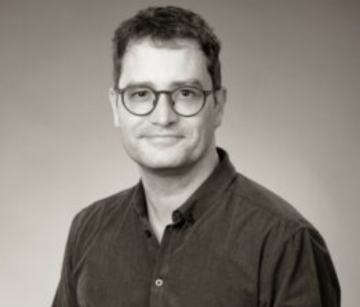
Dr. Sebastian Schwecke
Visiting Faculty, ARC Programme, TCG CREST
Founding Director of the Max Weber Forum for South Asian Studies, New Delhi
Dr. Sebastian Schwecke is the founding Director of the Max Weber Forum for South Asian Studies, New Delhi, a research institute of the Max Weber Foundation, Germany, a position he has held since 2021. He received his PhD from Leipzig University in 2010 and subsequently completed his Habilitation at the University of Göttingen, before serving as Associate Professor at the Indian Institute of Management Calcutta. He has also held fellowships at the International Institute of Asian Studies, Leiden University, and the Centre for Modern Indian Studies, Göttingen.
Schwecke’s work is situated at the interface of social and economic history and economic anthropology, with a particular focus on how economic actors navigate uncertainty and the structures of social embeddedness that result. His research spans the study of markets, credit and debt, trust and hope, obligation, speculation, extra-legality, and economic decision-making, themes he has more recently extended into the study of labour, skill, and ecology. Originally focused on a north Indian setting, his scholarship has in recent years expanded to engage with the wider Indian Ocean region. He is the author of Debt, Trust, and Reputation: Extra-legal Finance in Northern India (Cambridge University Press, 2021) and co-editor of Rethinking Markets in Modern India: Embedded Exchange and Contested Jurisdiction (Cambridge University Press, 2020), among other volumes. His current DFG-funded research project, Work in the Bazaar, combines ethnographic and historiographic methods to study the organisation of labour and commercial space in the north Indian city of Banaras since the 1930s.
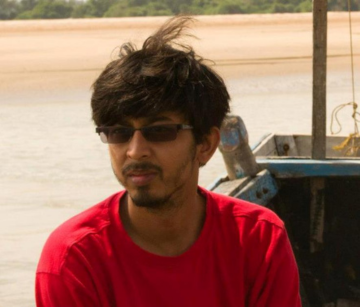
Upal Chakrabarti
Visiting Faculty, ARC Programme, TCG CREST
Associate Professor of Sociology at Presidency University, Kolkata
Dr. Upal Chakrabarti is an Associate Professor of Sociology at Presidency University, Kolkata. He completed his B.A. in Sociology from Presidency College, Calcutta (2005), his M.A. in Sociology from Jawaharlal Nehru University, New Delhi (2007), and his PhD in History from the School of Oriental and African Studies, University of London (2013), which he pursued on a Felix Scholarship. He was subsequently selected as a Fellow at the Institute of Critical Social Inquiry, New School of Social Research, to work with Gayatri Chakravorty Spivak on “Why Marx Today?”
Chakrabarti’s research spans intellectual history, colonialism, political economy, agrarian studies, science studies, and governance. His doctoral work examined the connections between political economy, science, agrarian governance, and regional property configurations in nineteenth-century British India, developed into his monograph Assembling the Local: Political Economy and Agrarian Governance in British India (University of Pennsylvania Press, 2021), published in the series Intellectual History of the Modern Age. He is currently working on the history of Hindu/Presidency College — the first institution of western education in Asia — examining its micro-practices of pedagogy, disciplinarity, scientific practice, and governance in relation to questions of empire, nation, and reform. This project is part of a larger collaborative initiative, Hindu/Presidency College: A Global History, supported by four years of funding from the University of Chicago Global Provost’s Faculty Awards, which has resulted in the forthcoming co-edited volume The Hindu/Presidency College: Excellence and Exclusion (Cambridge University Press). He also led a British Library Endangered Archives Programme pilot project to archive the Hindoo/Presidency College Collection (2019–20). His articles have appeared in Modern Asian Studies, the Journal of the Economic and Social History of the Orient, the Journal of the History of Ideas, and the Journal of Social History, among other leading journals.
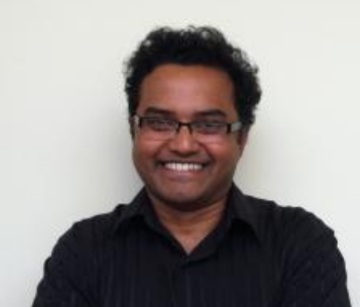
Dr. Suddhaseel Sen
Visiting Faculty, ARC Programme, TCG CREST
Associate Professor in the Department of Humanities and Social Sciences at the Indian Institute of Technology Bombay
Dr. Suddhaseel Sen is an Associate Professor in the Department of Humanities and Social Sciences at the Indian Institute of Technology Bombay, where he teaches in the discipline of English. He holds two doctoral degrees — a PhD in English from the University of Toronto and a PhD in Musicology from Stanford University — in addition to a B.A. (Honours) and M.A. in English from Jadavpur University. Prior to his current position, he was a Post-doctoral Teaching Fellow in the Department of English at the University of British Columbia, and has also taught at Presidency University, Kolkata.
Sen’s research spans an unusually wide range of disciplines, encompassing Adaptation Studies, Shakespeare and Renaissance Drama, nineteenth- and twentieth-century Indian literature, Translation Studies, Historical Musicology and Ethnomusicology, Ecocriticism, the History of Science, and Detective Fiction. His monograph Shakespeare in the World: Cross-Cultural Adaptation in Europe and Colonial India 1850–1900 was published by Routledge in 2021. His scholarly distinction has been recognised through numerous prestigious honours across both his fields, including the C1973 Research Excellence Award and the Young Faculty Award at IIT Bombay, the Stanford Mellon Doctoral Fellowship and the Stanford Interdisciplinary Graduate Fellowship, a Residency at the Cité Internationale des Arts in Paris, a Research Visitorship with the Balzan Foundation for the project “Towards a Global History of Music,” and the Hedy King Robinson International Award for Distinction in Theory of Music from the Associated Board of the Royal Schools of Music, UK. He is also the principal investigator on a Government of India SPARC Grant (₹97 lakhs) for the project “Translations in Colonial India, 1800–1947: Paradigms, Networks, and Practices.”
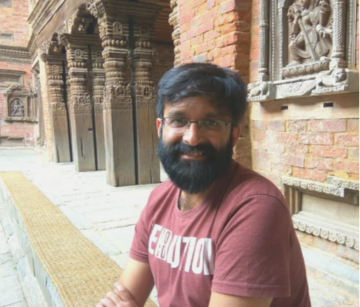
Dr. Gaurav Garg
Visiting Faculty, ARC Programme, TCG CREST
Assistant Professor of History in the Department of History at Ashoka University
Dr. Gaurav Garg is an Assistant Professor of History in the Department of History at Ashoka University, India. He describes himself as a historian of cities, mountains, and modern South Asia, with current research focusing on urban capitalism in the global South, the postwar concept of urban crisis, and the history of international development.
His first book, Agents of Inertia: The Pursuit of Business Interest and Calcutta’s Urban-Economic Decline, 1900–1970, is forthcoming from Cambridge University Press (2026). The book is a history of the spatial politics of business elites in twentieth-century Calcutta, arguing that for a period of roughly seventy years, from the late nineteenth century to the late 1960s, Calcutta’s businesses emerged as one of the principal obstacles to spatial change and infrastructural development in the city — recasting how we understand one of the most consequential episodes in the economic and urban history of postcolonial India, while challenging the widely held assumption that businesses in capitalist cities are natural drivers of urban growth and development. He is currently working on a second book, tentatively titled Foundations of Development, which will be a history of the Ford Foundation’s involvement in postcolonial India’s politics and development. He is also developing a third project on the global history of Indian mountaineering, a subject he already teaches as a course at Ashoka Univer, exploring the central but often underappreciated place of mountains in the making of the modern world. His teaching at Ashoka further includes courses on World Cities in Theory and History, the Business History of India, and a foundation course on Indian Civilizations.
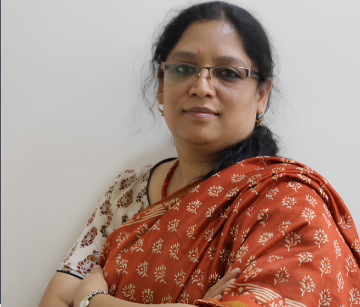
Aparna Vaidik
Visiting Faculty
Professor of History, Ashoka University
Aparna Vaidik is historian of modern South Asia. She has previously taught at Georgetown University, Washington DC and University of Delhi. She was educated at Centre for Historical Studies, JNU; University of Cambridge, UK; and St. Stephen’s College, Delhi. She was the founding head of the Department of History at Ashoka University and winner of two major international grants from the Andrew Mellon Foundation and The British Academy. She was a visiting fellow at the German Historical Institute in London. She was the Chair of the Program Committee of the Association of Asian Studies, AAS-in-Asia Conference held in Delhi and has served was on the Board of Studies of Liberal Arts Program, Guru Gobind Singh Indraprastha University, Delhi and.
Aparna has to her credit a diverse set of monographs, journal articles and book chapters in volumes on environmental history, labour history, history of Indian nationalism and revolutionism, the history of the Indian Ocean and its islands, and psychoanalytical history. Pedagogical innovation, curricular design, research supervision and mentorship of graduate and undergraduate students are the defining aspects of her teaching life. She has been part of the team that developed ‘india and me’ – a public pedagogy program; and has served as a subject expert on Committee for Preparing curriculum and training manuals for CBSE’s Centre for Excellence and for the Schools of Specialised Excellence Project. She is also involved in various Public History projects. These include the founding and membership of the Milli Consortium, a group of individuals and communities interested in nurturing and protecting archives; has worked as a consultant on a project run by the Delhi Art Gallery for curating a public exhibition at the New Delhi’s Red Fort ‘March to Freedom’; and served as an expert for historical ethnography for ‘Grand Trunk Road Heritage Project’ of the American Institute of Indian Studies.
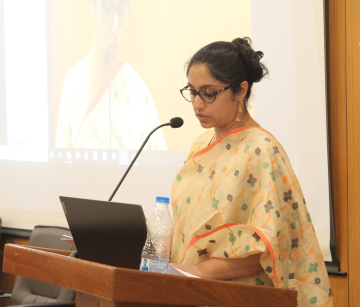
Sukanya Sarbadhikary
Visiting Faculty
Associate Professor, Department of Sociology, Presidency University
Dr. Sukanya Sarbadhikary is an Associate Professor in the Department of Sociology at Presidency University, Kolkata, which she joined in 2012. She completed her B.A. in Sociology from Presidency College, Calcutta (2005), her M.A. in Sociology from Jawaharlal Nehru University (2007), and her Research Training Programme from the Centre for Studies in Social Sciences, Calcutta (2008), standing first in each. She went on to complete her PhD in Social Anthropology from Trinity College, University of Cambridge (2012), supported by the Gates Cambridge Trust and the Overseas Research Studentship.
Sarbadhikary works at the interface of the anthropology of religion, anthropology of embodiment and materiality, religious studies, and philosophy, with a growing engagement with planetary anxieties and ecological vulnerability as they intersect with sacred life. Her first book, The Place of Devotion: Siting and Experiencing Divinity in Bengal-Vaishnavism (University of California Press, 2015, series: South Asia Across the Disciplines), was based on an intensive ethnography among Bengal-Vaishnavas, examining how sacred place is constructed not only through physical geography but through embodied affects of the mind, body, and senses — particularly through sonic and musical experience. She has also worked extensively on South Asian aesthetics, devotional instruments, and traditions of sonic metaphysics in Bengal, as well as on Orissan Jagannath worldviews and tantric-devotional lifeworlds. Her current research, undertaken in collaboration with Prof. Dipesh Chakrabarty of the University of Chicago, examines the overlapping marine and social lives of the turbinella pyrum — the domestic conch — and how this long-held sacred object is being transformed by rapidly changing ecological habitats and climate change, spanning communities across the Bay of Bengal coast, Bangladesh, and Sri Lanka. This project has been supported by the University of Chicago Provost’s Global Faculty Awards (2023–24 and 2024–25). She is also a Co-Investigator on the MANTRAMS Project — Mantras in Religion, Media, and Society in Global Southern Asia, a major European Research Council Synergy Grant of €9.65 million (2024–2030), jointly hosted by the Universities of Tübingen, Oxford, and Vienna.