
TCG CREST invites applications for
Signature Course in
Bioanalytics in Healthcare
Offered by the School of Health, Environment and Sustainability Studies (SHESS)
An interdisciplinary course exploring the science, technologies and innovations transforming healthcare diagnostics.
Course Overview
Bioanalytics in Healthcare is an interdisciplinary course exploring the technologies and scientific principles underpinning modern healthcare diagnostics.
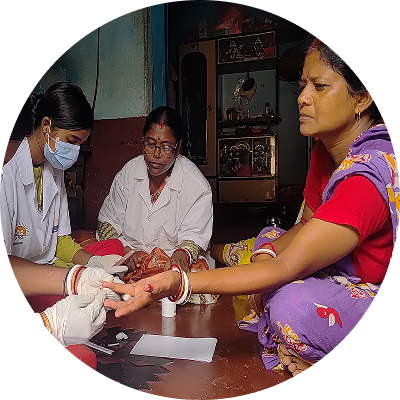
Participants will explore how sensing technologies, micromachining and nanotechnology, microfluidics, quantum technology, and artificial intelligence are transforming healthcare diagnostics particularly in point-of-care and resource-limited settings.
The course combines foundational knowledge with real-world diagnostic challenges, encouraging participants to identify unmet needs and develop innovative solutions.
COURSE DIRECTOR
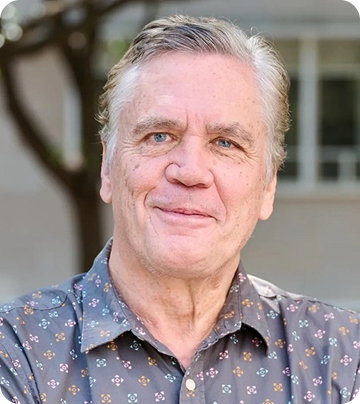
Professor Marc Madou
International Visiting Fellow, SHESS | Distinguished Professor Emeritus, Department of Mechanical & Aerospace Engineering, UC Irvine | Distinguished Professor, Instituto Tecnológico y de Estudios Superiores de Monterrey (Tec) | NAI Fellow
Dr. Marc Madou is Distinguished Professor Emeritus at the University of California, Irvine, where he worked for over 20 years teaching mechanical and aerospace engineering and biomedical engineering. He has also held academic positions at The Ohio State University, UC Berkeley, UNIST, IIT Kanpur and IIT Kharagpur.
He specializes in micro- and nanofabrication processes and miniaturization science and technology applied to chemical and biological problems (Bio-MEMS). He is considered a pioneer in carbon micro- and nanofabrication (C-MEMS/C-NEMS) and compact disc fluidics (CD fluidics) for molecular diagnostics.
His work has contributed to multiple startups, including Enevate and Cence, and he is a Fellow of the National Academy of Inventors and member of the Mexican Academy of Sciences.
"Join us for an immersive and interdisciplinary experience where researchers from diverse backgrounds, including medicine, learn about application of bioanalytic principles behind democratisation of healthcare diagnostics in real-life extreme-point-of-care."
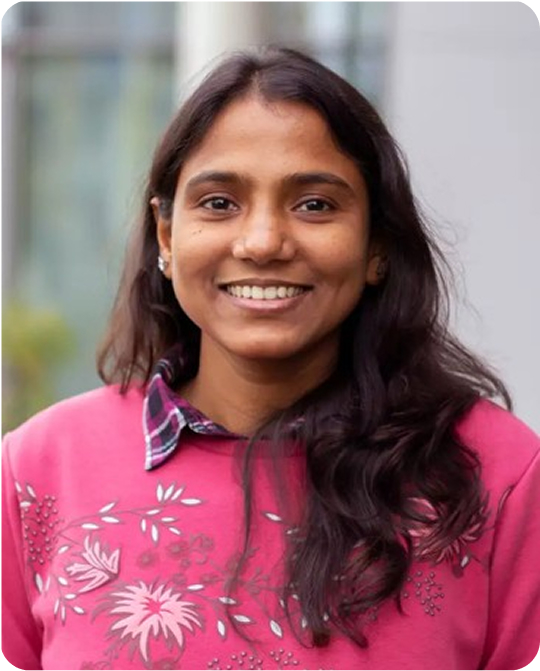
COURSE COORDINATOR
Dr. Soma Roy, MRSC
Assistant Professor, SHESS
Dr. Soma Roy is a chemical biologist whose research lies at the interface of organic synthesis, nucleic acid biology, and biophysical and computational approaches, with a focus on developing nucleic acid-targeted diagnostics and therapeutics. She earned her PhD from the Indian Institute of Science, Bangalore, followed by postdoctoral research at IACS Kolkata, the Max Planck Institute for Molecular Physiology, UF Scripps, and Simon Fraser University.
Her research encompasses G-quadruplex- and RNA-targeted small-molecule design, nucleic acid therapeutics, and assay development for point-of-care diagnostics. As a Ramanujan Fellow at IIT Guwahati, she contributed to research on miRNA-based theranostics.
She has joined as an Assistant Professor at the School of Environment, Health and Sustainability Studies (SHESS), TCG CREST, Kolkata. Her current research focuses on structure-activity studies of small molecules targeting cancer-associated microRNAs to understand how their modulation influences cancer biology.
Course Instructors
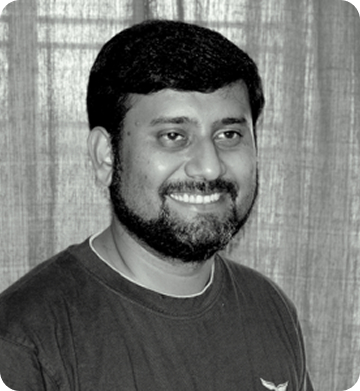
Dr. Mallar Ray
Research Professor, Nanotechnology and Semiconductor and Research Group, School of Engineering and Sciences, Tecnológico de Monterrey, Mexico
Dr. Ray is a materials physicist with 18 years of research and teaching experience in nanomaterials. His research focuses on semiconductors, composite nanosystems and nanophotonics for energy harvesting, nanoscale visualization and sensing.
His group develops low-dimensional thermoelectric materials for converting waste heat into electricity, using machine learning to design high-efficiency materials and engineered systems. They also study light – matter interactions at nanoscale, developing visualization techniques by combining scanning probe microscopy with structured light. His group collaborates with Imperial College London, University of Ottawa, University of Alberta, CIMAV and IITs across India.
He teaches materials science and quantum mechanics at UG and PG levels, including a course on Quantum Mechanics for Nanotechnology. He also works on science advocacy and physics education tools.
Dr. Erwin Fuhrer
Assistant Professor, Indian Institute of Technology, Guwahati
Dr. Erwin Fuhrer is an Assistant Professor at the Jyoti and Bhupat Mehta School of
Health Sciences and Technology, IIT Guwahati, working on the development of
low-field and cost-efficient MRI systems.
He received his Ph.D. from the Karlsruhe Institute of Technology, following an M.Sc. in Microsystems Engineering from the University of Freiburg and a B.Sc. in Physical Engineering from the University of Applied Sciences Weingarten. Before joining IIT Guwahati, he held academic positions at IIT Mandi and the University of Freiburg and worked in industry on the development of novel MR probes.
He currently leads and contributes to several projects on affordable point-of-care MRI and collaborates with institutions including IIT Kharagpur, SAMEER Mumbai, and the Assam Advanced Healthcare Innovation Institute.
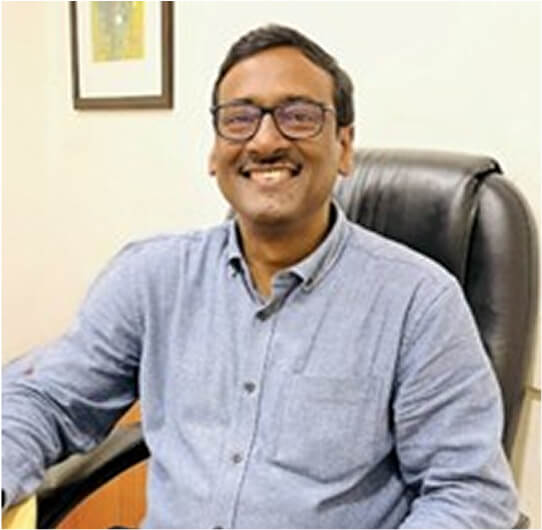
Prof. (Dr.) Satadal Saha, MS, FRCS (Eng)
Dean, SHESS | President, Foundation for Innovations in Health (FIH)
Cross-sectoral experience of over 40 years in the health sector spanning across hospitals, primary care, training of health human resources, translational
inter-disciplinary frugal healthtech innovation, clinical informatics software development,
last-mile digital healthcare and founding institutions. Among the top 40 global changemakers in 2025 (Stanford Graduate School of Business & Stanford Doerr School of Sustainability).
- President, Foundation for Innovations in Health (FIH)
- Consultant, International Finance Corporation (member of World Bank Group)
- Serial entrepreneur
- Former Professor, School of Medical Science & Technology, IIT Kharagpur
- Former Consultant, Assam Advanced Healthcare Innovation Institute (AAHII), IIT Guwahati
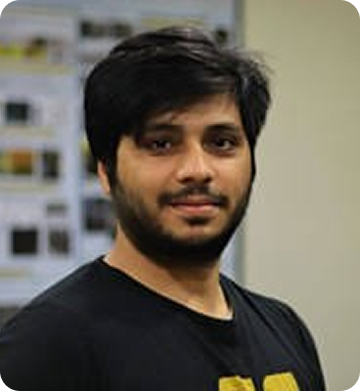
Dr. Gaurav Chauhan
Research Professor, Nanotechnology and Semiconductor and Research Group, School of Engineering and Sciences, Tecnológico de Monterrey, Mexico
Dr. Gaurav Chauhan is Assistant Professor of Bioengineering at Tecnológico de Monterrey, Mexico, and member of Mexico’s National Research System (SNI Level I). He has over a decade of interdisciplinary experience across nanotechnology, biomaterials and microengineering.
His research focuses on nanomedicine, lab-on-a-chip and organ-on-chip systems, biofunctional MEMS/C-MEMS devices and nanobiosensors for disease diagnostics and regenerative applications.
Dr. Chauhan has published 40+ peer-reviewed papers, contributed to book chapters and holds three international patents. He leads ePCR and BBB-GBM on-a-chip projects and collaborates with clinical and industrial partners on precision diagnostics
He also contributes to Sytosol Technologies, a translational startup developing next-generation biosensing platforms.
Why This Course?
01. Truly Interdisciplinary
Global faculty bring expertise across C-MEMS/C-NEMS, diagnostics, MRI, biosensors, lab-on-chip and clinical medicine.
02. Learn. Discuss. Build.
Sensing, microfluidics, nanotechnology, quantum technology and AI connected directly to real-world diagnostics and frugal healthcare.
03. Extreme Point-of-Care Focus
Course explores technologies and systems designed for accessible, affordable and resource-efficient healthcare.
04. Technology Meets Healthcare
Research discussions, brainstorming and proposal development help participants turn knowledge into practical healthcare solutions.
Who This Is For
- Participants with an engineering or science background, including postdoctoral researchers, postgraduate and PhD students, industry professionals, and physicians.
Prerequisites:
- Fundamental knowledge of physics; Introductory knowledge of chemistry and biology
- No prior specialization is required; the course is interdisciplinary
What You Will Learn
- Introduction and democratization of healthcare
- Extreme Point-of-Care (EPOC) and Frugal Healthcare
- Sensors in Healthcare - overview of sensor systems used in laboratory and field settings
- AI in sensor systems & diagnostics
- Physical Principles in Bioanalytics (mapped to healthcare systems) - Magnetic and electrical principles (e.g., NMR and ECG), Electrochemical and impedance principles (e.g., blood-gas sensors), Surface and interfacial phenomena in sensors, Optical spectroscopy and X-ray principles, Piezoelectric and thermal principles
- Role of micromachining and nanotechnology in advancing healthcare sensors and sensor systems
- Role of quantum technology in advancing healthcare
- Fundamentals of microfluidics and its role in healthcare
- Future Possibilities, Proposal writing session
At a Glance
DEADLINE
15th November 2026
DURATION
7th – 21st December 2026
75 hours
DELIVERY
In-person
(Lectures, Field Immersion, Group Discussion, Assignments, Proposal Writing)
ELIGIBILITY
Postdoctoral Researchers/ PhDs/ Postgraduates/ Industry Professionals/ Physicians
(engineering or science background)
BATCH SIZE
25 seats
(Limited Seats)
COURSE FEE
INR 25,000
(merit-cum-means scholarships available)
CERTIFICATE
Certificate of Completion
Participants will receive a Certificate of Completion from TCG CREST (Deemed to be University under UGC Act, 1956)
APPLICATION PROCESS
- Form by 10th October 2026
- Interview for Shortlisted Candidates
- Admissions Decision
Why Bioanalytics Matters in
Healthcare
01. Integrate Emerging Technologies
Connect sensors, microfluidics, nanotechnology, quantum technologies and AI.
02. Address Diagnostic Challenges
Focus on unmet needs in point-of-care and resource-limited healthcare.
03. Enable Accessible Diagnostics
Explore affordable, reliable, portable and easy-to- use diagnostic solutions.
04. Translate Research into Impact
Bridge fundamental science with practical, deployable healthcare technologies.
Shape the Future of
Healthcare
In addition to domain-specific qualifications, this certification significantly enhances career opportunities across:
- Medical device and diagnostics industries
- Digital health and AI-driven healthcare organizations
- Biomedical and Public Health research and R&D institutions
- Health-tech startups and point-of-care innovation ecosystems
Please reach out to us at [email protected] for further queries on the course
Learn more about SHESS (School of Health, Environment & Sustainability Studies)