
School of
Humanities and Social Sciences
With its location in Kolkata, this new School of Humanities and Social Sciences at TCG CREST is envisioning a revitalisation of the city’s lineage of interdisciplinary research, teaching programmes and collaborative projects, by bringing in fresh energies and cutting-edge talents of senior and younger scholars from all over the country. It breaks new ground by moving away from traditional disciplinary silos and inaugurating a group of new interdisciplinary thematic clusters of scholarship. Qualitative tools of analysis pulled from distinct disciplinary traditions, such as History, Anthropology, Sociology, Political Science or Literary Studies, will be brought to bear within these clusters to illuminate specific objects of analysis such as art, science, urban life, society, media and culture.
Durga Puja Public Art By Pradip Das, Samaj Sebi Sangha, 2019 © Tapati Guha-Thakurta
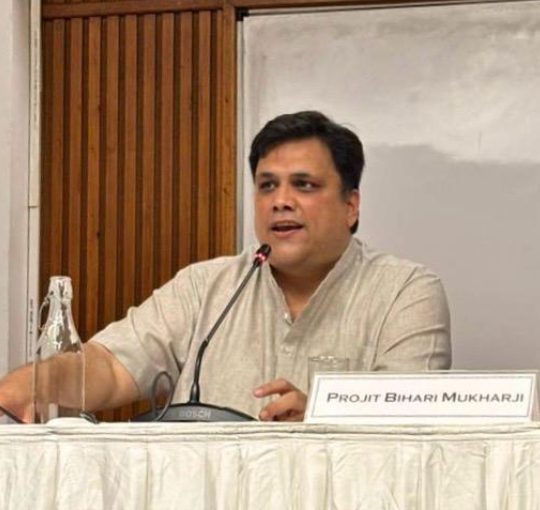
Projit Bihari Mukharji
Dean
Projit Bihari Mukharji is a historian of science. He was educated at Presidency College, Calcutta; J.N.U., New Delhi; and SOAS, London. He has taught at universities in the UK, Canada, USA, and India, including holding tenured professorships at the University of Pennsylvania and Ashoka University. Mukharji has been the recipient of several prestigious honors, including the Pfizer Award and the Guggenheim Fellowship. He is currently Co-Editor of the journal Isis: A Journal of the History of Science Society.
Advisory Committee
The Advisory Committee of the School of Humanities and Social Sciences has been constituted to guide the academic vision, structure, and launch of the School. The Committee brings together eminent scholars and teachers who have shaped humanities and social science education and research in India and the world.
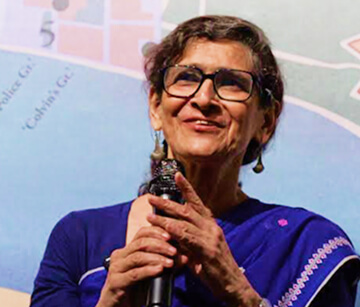
Tapati Guha-Thakurta
Chairperson
Honorary Professor of History at the Centre for Studies in Social Sciences, Calcutta
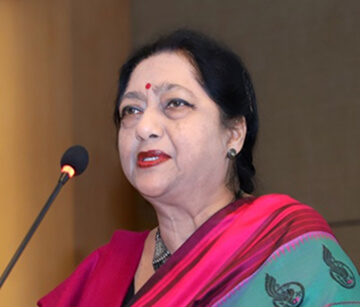
Malabika Sarkar
Member
Mentor, TCG CREST
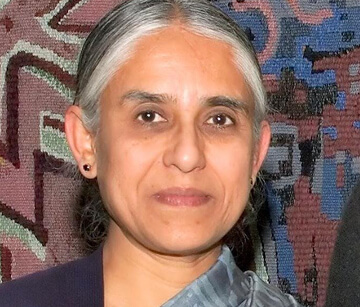
Supriya Chaudhuri
Member
Professor Emerita, Department of English, Jadavpur University, Kolkata
Souvik Mukherjee
Member
Associate Professor, Cultural Studies, Centre for Studies in Social Sciences, Calcutta
Udaya Kumar
Member
Retired Professor, Centre for English Studies, Jawaharlal Nehru University, New Delhi
Parul Dave-Mukherji
Member
Dean and Professor at the School of Arts and Aesthetics, Jawaharlal Nehru University, New Delhi
Research Areas
Art History, Visual Culture & Media Studies
History and Sociology of Science
Critical Urban Studies
Archives & Public History
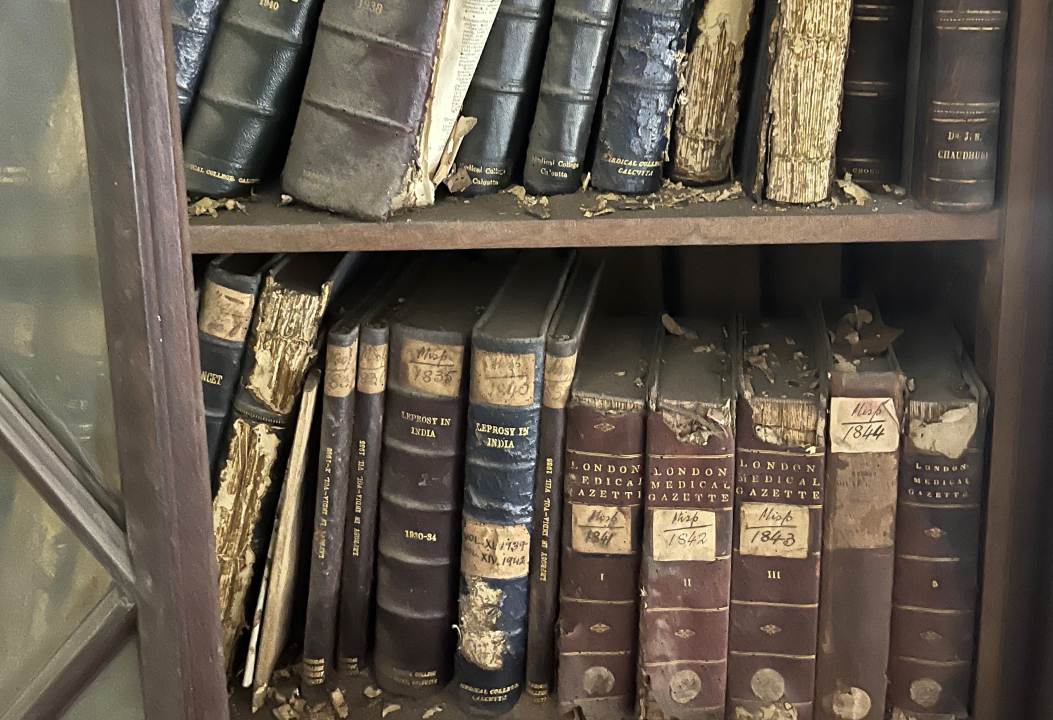
As critical practice and new technologies intersect, there emerges new objects and ways of archiving. The documentation of manuscripts and texts have now been joined by the digitization of still and moving images, music and sound, oral histories, popular print cultures and other kinds of ephemera. Recently, even old websites have been archived, and efforts have now begun to find ways to archive performances or gestures by digital geometry. The classical tools of cataloguing, indexing and preserving are cross-fertilizing with technologies of digitization and file-sharing and even newer methods of digital tagging, visualization and text recognition – all of which now exist in an expanding toolkit of archiving. The task of archiving, once the preserve of hallowed institutions connected to the state, is now much more varied and taken up by a heterogeneous set of actors and communities. From individuals to companies and from hospitals to hobby groups, several people and institutions now collect, catalogue, and curate the diverse traces of the past. With this diversification has come a diversification of the audiences these collectors and collections serve. It is this intersection between a plural public history and archiving that will be the focus of this cluster. The cluster will both serve and study the communities of archivists, librarians, collectors, and others who participate in archiving and public history.
Digital Humanities and Culture
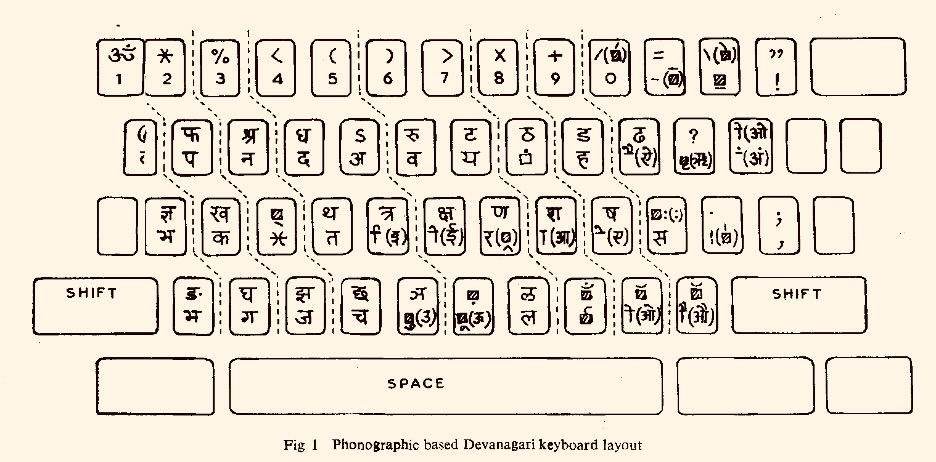
This cluster explores the relationship between Humanities and digital technologies, focusing on themes such as databases, digital commons, ethics, AI, and knowledge representation. It introduces students to digital humanities methods, including archiving, data analysis, digital tools, and social media research. Key areas include Software Studies, Digital Cartography, Digital Ethnography, Electronic Literature, Game Studies, and AI-based data mining and analysis.
Know more
remove this block
Culture emerges in modern life at different levels. As an often-unstated set of values and worldviews ….
Urban Sites, Spaces and Ecologies
This interdisciplinary cluster moves away from traditional urban studies to reengage urban phenomena ….
Archives and Public Histories
As critical practice and new technologies intersect, there emerges new objects and ways of archiving ….
delete this too
Programmes
SHSS is a research-led, applied humanities School. The courses will cultivate a shared outlook to humanistic and social scientific research as one that is socially engaged, impactful, and with potentials for application in the broadest sence of the term.
To that end, it will begin its journey with the PhD, MA and Specialized Courses. SHSS currently does not plan to offer any UG degree courses.
Ph.D. Programme
SHSS will offer a PhD in “Integrated Humanities & Social Science”. The programme will have two full years of course work followed by three years of research. The course work will focus not only on giving the students a broad methodological grounding in the Humanities and Social Sciences, but also on integrating the various disciplines and tools to devise a coherent methodological toolkit for research. Student’s topics will have to align with the school’s broad areas of research.
Interdisciplinary Research Clusters
Art History and Visual Studies
This cluster will be studying the main methodological and conceptual shifts that have redefined the discipline ….
History and Sociology of Science
Science is all around us: sometimes in spectacular events, like space missions, and sometimes in more ….
Digital Humanities and Culture
The Politics of Culture
Culture emerges in modern life at different levels. As an often-unstated set of values and worldviews ….
Urban Sites, Spaces and Ecologies
This interdisciplinary cluster moves away from traditional urban studies to reengage urban phenomena ….
Archives and Public Histories
As critical practice and new technologies intersect, there emerges new objects and ways of archiving ….
History and Anthropology
M.A. Programme
Specialized Professional Courses
SHSS will offer various short topical courses at different points in the year. According to CREST’s broader vision, these courses will be research led and grouped into two broad groups: Access to Research at Crest [ARC] and Continuing Education Programme [CEP].
Whereas ARC courses will be focused on breaking new academic and intellectual ground, the CEP courses will be for professionals already working in an area intending to develop new skills.
These courses will generally be held in the summer and winter months and will be between 2 to 8 weeks in duration. Individual topics, dates, durations and admission criteria will be announced separately.
Access to Research at CREST (ARC) in Applied Humanities
Continuing Education Programme (CEP)
Digital Engagements
Barefoot Nations:Football, Freedom, and Belonging in Bengal
SHSS’s mission is to develop a new, engaged and embedded approach to humanistic scholarship. Avoiding ivory towers and armchairs this summer, along with the rest of the world, it has decided to muddy its boots on the football pitch by hosting an exhibition commemorating Bengal’s passionate and historical love for “the beautiful game”.
Openings @
School of Humanities and Social Sciences
The newly-starting SCHOOL OF HUMANITIES AND SOCIAL SCIENCES invites applications for Open-rank faculty positions (Professors, Associate Professors and Assistant Professors) and two-year Postdoctoral fellowships in the interdisciplinary fields of Art History and Visual Studies; Cultural History, Cultural Anthropology and Cultural Studies; and Digital Humanities and Culture.
Open-Rank Faculty Positions
Professors, Associate Professors and Assistant Professors
To apply for this position, please email your supporting documents to [email protected]
Post Doctoral Fellowship
To apply for this position, please email your supporting documents to [email protected]
Events & Activities
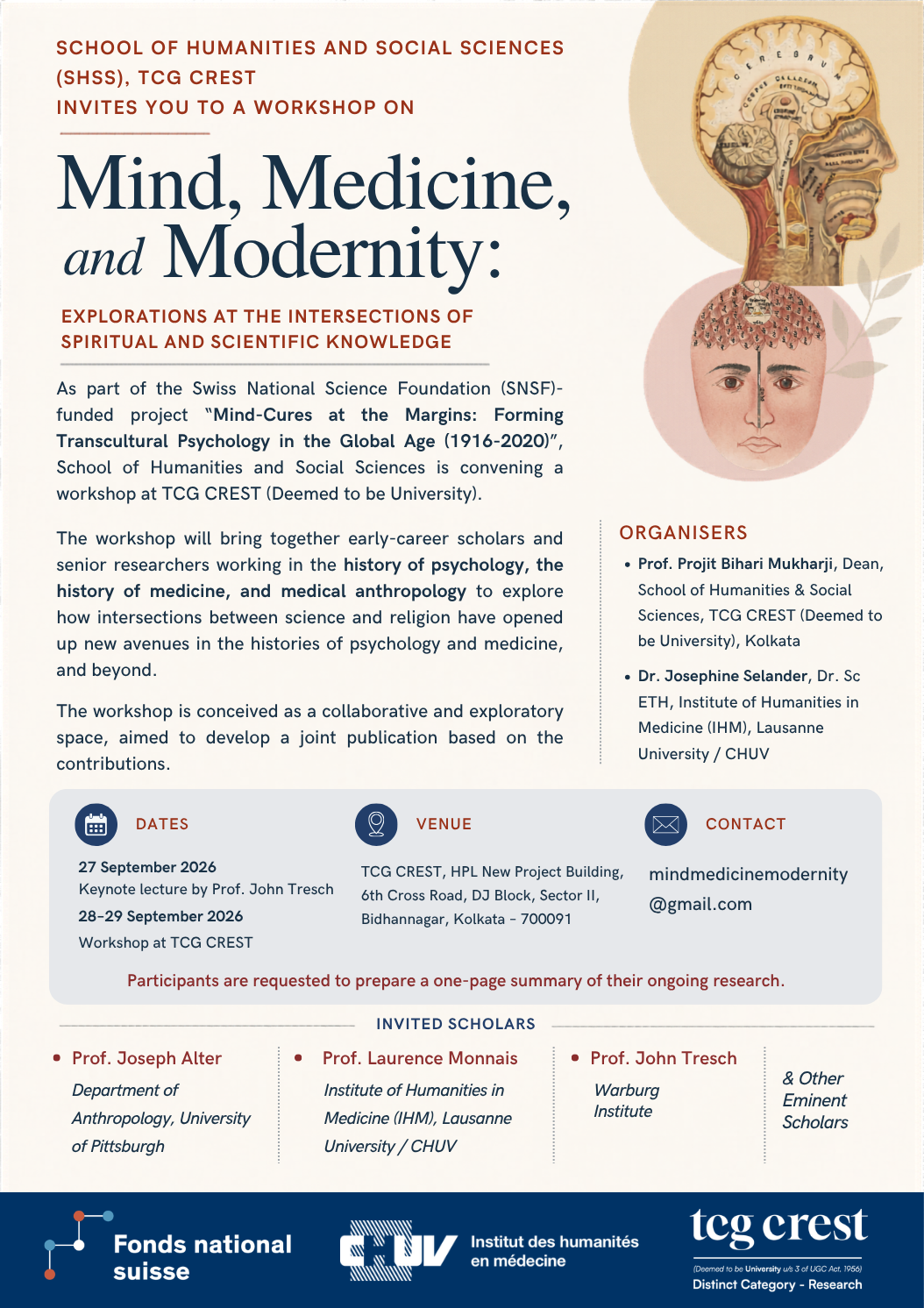
Conference on “Mind, Medicine, Modernity: Explorations at the Intersections of Spiritual and Scientific Knowledge” was organized in collaboration with the Institut des humanités en medécine, University of Lausanne, on the 26th, 28th and 29th of September 2026.
Click to Zoom
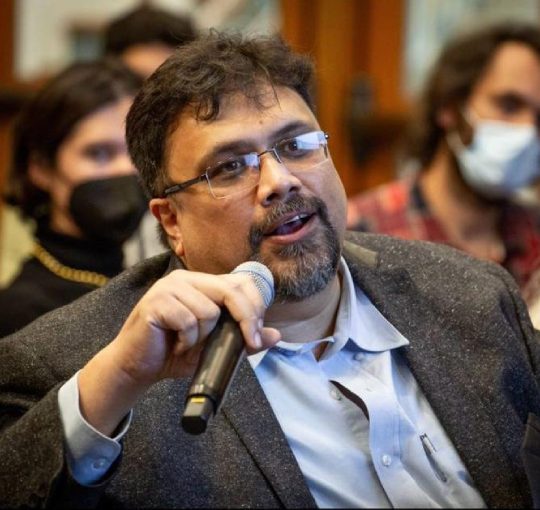
Projit Bihari Mukharji is a historian of science, specializing mainly in the histories of medicine, biology, and psychology, in modern South Asia. He has authored three monographs and dozens of articles in some of the foremost international journals. Amongst his books are Nationalizing the Body (London, 2009), Doctoring Traditions (Chicago, 2016) and Brown Skins, White Coats (Chicago, 2023) which won several prizes including the prestigious Pfizer Award. Before joining TCG-Crest, Mukharji taught for two decades in universities in the UK, Canada and the USA. This included over a decade at the University of Pennsylvania. His research was supported and recognized at various points by the SSHRC, Canada, Wellcome Trust, UK, and the NSF, USA. Mukharji has also been a Guggenheim Fellow.
Trained within the Subaltern Studies tradition, Mukharji’s main research interest is in tracing issues of marginalization within and through processes of knowledge-production. He has explored themes ranging from the work of lower-level South Asian physicians in the colonial medical service, the marginalization of therapeutic practices like nadipariksha (traditional pulse-reading), and the reframing of racial difference through human genetics. Lately, he has been working on the histories of parapsychology, model organisms, and anthropology. Currently, Mukharji also serves as the Co-Editor of Isis, the official journal of the History of Science Society. Over a century old, the journal counted eminent Bengali chemist-and-historian,
Sir PC Ray, amongst the members of its founding editorial group. Mukharji is keen to hear from students interested in researching any aspect of the history of knowledge-making in modern South Asia.
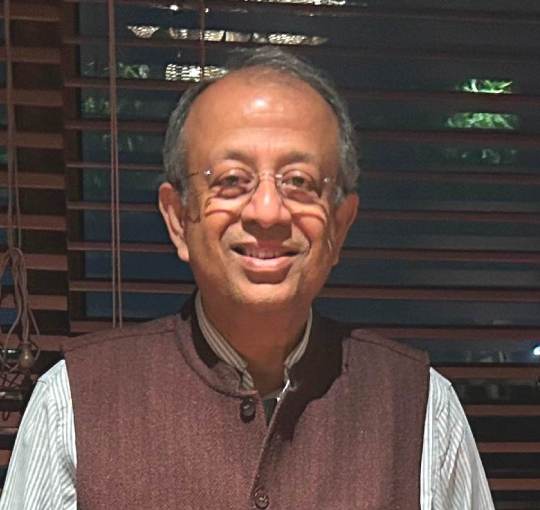
Jayanta Sengupta
Professor
Former Director, Alipore Museum, Kolkata; Former Director of the Victoria Memorial Hall, Kolkata
Contact :
[email protected]
Jayanta Sengupta is a historian of modern India whose career has moved between the academy and the museum, between the production of scholarly knowledge and its translation into public narratives. Educated at Presidency College, Kolkata, and the Universities of Calcutta and Cambridge, he taught History for over two decades at Jadavpur University and the University of Notre Dame, and held visiting appointments at the Universities of Cambridge, Pennsylvania, Heidelberg, Utah State, Exeter, and Calcutta. In 2013 he turned to the museum profession, serving successively – and often concurrently – until 2026 as Director of the Victoria Memorial Hall, the Indian Museum, the Anthropological Survey of India, and the Alipore Museum, Kolkata.
Sengupta is the author of At the Margins: Discourses of Development, Democracy and Regionalism in Orissa (Oxford, 2015) and Those Noble Edifices: The Raj Bhavans of Bengal (Kolkata, 2019), as well as two volumes of essays in Bengali – Itihās o Samosamay: Samāj Sanskriti Rājniti [‘History and the Present: Reflections on Society, Culture, and Politics’] (Kolkata, 2022) and Hensheldarpan: Bāngālir Hānrir Khobor [‘Through the Kitchen’s Looking Glass: The Alimentary Aspects of Bengal’s History’] (Kolkata, 2023). He is also co-editor of The Long History of Partition in Bengal: Event, Memory, Representations (New York and London, 2024). His recent articles have appeared in The American Historical Review, Modern Asian Studies, Global Food History, and the Times Literary Supplement. He is currently completing two books – An Indian Critique of the United States in the Progressive Era: Bhupendranath Datta’s ‘My Experiences of America’ and Nation on a Platter: Food, Culture, and Politics in Bengal and the South Asian World – and writes a regular opinion column for The Telegraph, Kolkata.
His current research spans cultural practices in modern India, the culture and politics of food and eating, transnational and comparative intellectual history, public history and museums, and the entanglements of colonialism, nationalism, democracy, and authoritarianism in modern South Asia. He welcomes enquiries from prospective students wishing to pursue research in any of these areas.
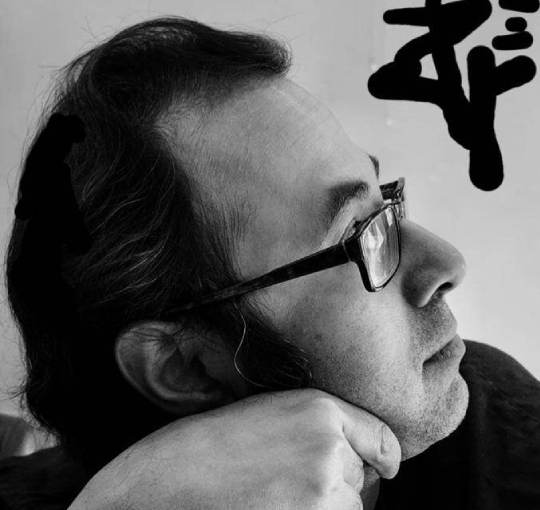
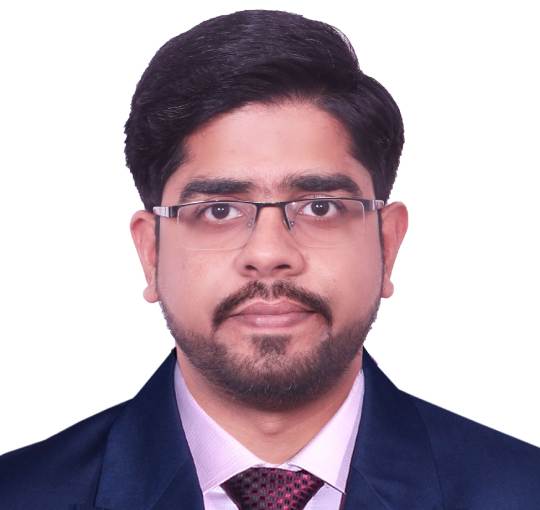
Dr. Mohammad Sajjad Hussain is a Postdoctoral Fellow at the School of Humanities and Social Sciences at TCG CREST, Kolkata. With a training in sociology, he specializes in the study of digital platforms and gig work. Currently, he is working on the societal implications of food delivery platforms focusing on delivery workers and restaurant-platform relations. His areas of interest include ethnographic research methods, labour studies, platform studies, and economic sociology.
His publications have examined food delivery workers’ collective action during COVID-19, the use of algorithmic management by food delivery platforms, and the experience of occupational stigma amongst delivery workers.
Previously, he was a Postdoctoral Fellow at Krea University. He received his PhD in Sociology from the Delhi School of Economics, University of Delhi. During his PhD, he received scholarships from ICSSR and Oxford Internet Institute. Prior to his PhD, he worked at IIM-Bangalore and Hyderabad Urban Lab.
Tapati Guha-Thakurta
Chairperson
Honorary Professor of History at the Centre for Studies in Social Sciences, Calcutta
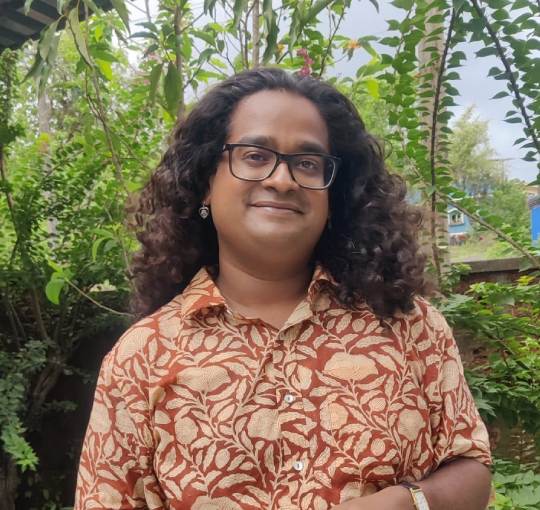
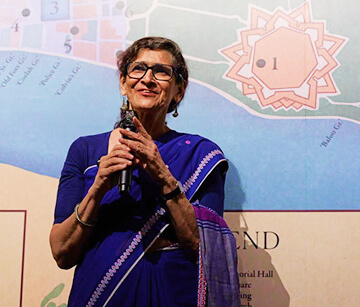
Tapati Guha-Thakurta is an Honorary Professor of History at the Centre for Studies in Social Sciences, Calcutta (CSSSC) and was its former Director from 2012 to 2017. She has written widely on the art and cultural history of modern India, and has held several visiting fellowships abroad. Her three main monographs are The Making of a New ‘Indian’ Art: Artists, Aesthetics and Nationalism in Bengal (Cambridge University Press, 1992), Monuments, Objects, Histories: Institutions of Art in Colonial and Postcolonial India (Columbia University Press, and Permanent Black, 2004), and In the Name of the Goddess: The Durga Pujas of Contemporary Kolkata (Delhi: Primus Books, 2015). She has also authored exhibition catalogues, such as The City in the Archive: Calcutta’s Visual Histories (Calcutta: CSSSC, 2011); and has co-edited anthologies of essays, the most recent among these, How Secular is Art? On the Politics of Art, History and Religion in South Asia (Cambridge University Press, 2023). Her latest edited volume is a centenary anthology on the artist, Meera Mukherjee, titled From the Depth of the Mould (Galerie 88 and Jadavpur University Press, 2024).
Malabika Sarkar
Mentor, TCG CREST
Vice-Chancellor (Officiating)
Malabika Sarkar is Mentor & Vice-Chancellor (Officiating) TCG CREST. Her role and responsibilities include providing mentorship to the senior leadership team in policy making, to help align the organizational structure of TCG CREST to its strategy and goals, and to provide guidance in shaping TCG CREST into a research-first university.
She was Vice-Chancellor of Ashoka University, Delhi NCR, from 2019 to 2023 and Professor of English. As Principal Advisor and Professor of English at Ashoka University from 2015, she was additionally Ashoka’s first Dean of Faculty and Research (2016-2019) before becoming Vice-Chancellor in 2019.
She was First Vice-Chancellor of Presidency University in Kolkata (2011-14), responsible for the transition of the institution from Presidency College (established as Hindu College in 1817) to Presidency University.
She was earlier a Professor of English at Jadavpur University, a member of the University Council (1980-85), a panel member of NAAC, and member of other UGC committees.
An alumna of Cambridge University, later Visiting Fellow and Life Member of Clare Hall College, Cambridge, she was elected a Foundation Fellow at Clare Hall in 2025.
Primarily a Miltonist, her academic field is Early Modern Literature and the History of Science. Her other area of interest is Romantic Literature and culture and she was the Founder President of the Centre for Studies in Romantic Literature (CSRL) from 1994 to 2018, directing its annual international conferences for twenty five years. She has presented her work at various conferences in the UK and North America.
Her books include Cosmos and Character in Paradise Lost (New York: Palgrave Macmillan, 2012), Moneta’s Veil: Essays on Nineteenth Century Literature (Delhi: Pearson, 2009), The Bengal Club in History (Kolkata: The Bengal Club, 2006) apart from book chapters and many scholarly articles in refereed journals. Book chapters include “Astronomical Signs in Paradise Lost” in Milton and the Ends of Time ed. Juliet Cummins (Cambridge: Cambridge University Press, 2003), “Milton’s Global Impact: India” in A New Companion to Milton ed. Thomas N. Corns (Oxford: Wiley Blackwell, 2016), “Yeats, Kipling and the Haven-Finding Art” in Kipling and Yeats at 150 ed. Pramodini Varma and Anubhav Pradhan (Oxford & New York: Routledge 2019). Her article on “The Magic of Shakespeare’s Sonnets” published in Renaissance Studies, Vol.12, No.2, June 1988 was republished in Shakespeare Criticism Yearbook 1998 (Farmington Hills, MI: Gale Group, 2000) in their “Selection of the Year’s Most Noteworthy Studies of William Shakespeare’s Plays and Poetry”.
She is an invited Fellow of the English Association (FEA), UK, and a member of the International Advisory Board of the journal European Romantic Review.
Since 2014, she is also President of the Women’s Coordinating Council (WCC), West Bengal, founded in 1960, the apex women’s organization in the state with more than 70 affiliated NGOs.
Supriya Chaudhuri
Member
Professor Emerita, Department of English, Jadavpur University, Kolkata
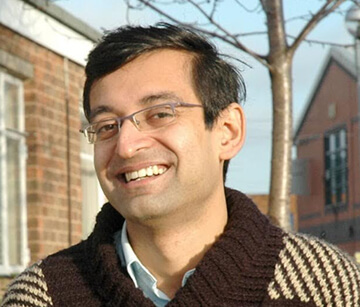
Souvik Mukherjee
Member
Associate Professor, Cultural Studies, Centre for Studies in Social Sciences, Calcutta
Souvik Mukherjee is Associate Professor in Cultural Studies at the Centre for Studies in Social Sciences, Calcutta. His research focuses on videogames and storytelling, videogames as postcolonial media, gaming cultures in the Indian Subcontinent and currently, Indian boardgames. Souvik is the author of four monographs, Videogames and Storytelling: Reading Games and Playing Books (Palgrave Macmillan 2015), Videogames and Postcolonialism: Empire Plays Back (Springer UK 2017) and Videogames in the Indian Subcontinent (Bloomsbury India 2022) and Indian Boardgames, Colonial Avatars (De Gruyter forthcoming). He was named a DiGRA (Digital Games Research Association) Distinguished Scholar in 2019 and a Higher Education Video Game Alliance (HEVGA) fellow in 2022. He is also an affiliated senior research fellow in Game Studies at the University of Tampere. His other interests are (the) Digital Humanities in India and his digital databases on the Dutch Cemetery at Chinsurah, the Scottish Cemetery in Kolkata and the nineteenth-century Bengali industrialist, Mutty Lall Seal are all available open-access.
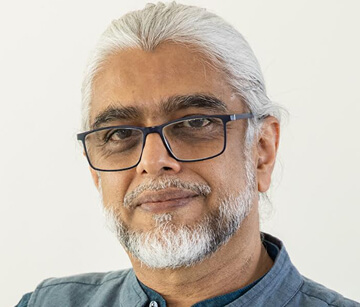
Udaya Kumar
Member
Retired Professor, Centre for English Studies, Jawaharlal Nehru University, New Delhi
Udaya Kumar recently retired as Professor from the Centre for English Studies, Jawaharlal Nehru University, New Delhi. He worked previously at Delhi University, Centre for Studies in Social Sciences, Calcutta and Pune University, and held Fellowships and visiting positions at the Indian Institute of Advanced Study, Nehru Memorial Museum and Library, Nantes Institute of Advanced Study and Newcastle University. His publications include Writing the First Person: Literature, History and Autobiography in Modern Kerala (Ranikhet: Permanent Black, 2016), The Joycean Labyrinth: Repetition, Time and Tradition in ‘Ulysses’ (Oxford: Clarendon Press, 1991), and papers on cultural theory, modern literatures and cultural history. Kumar’s recent research has focused on death and contemporary culture, affect and political expression, and idioms of vernacular social thought. He is at present completing a new book manuscript tentatively titled Literary Remembrance: Realism, Effective Histories and the Social Domain in Fiction from Kerala.
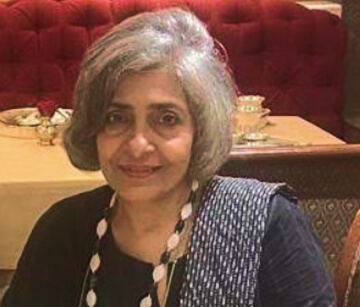
Parul Dave-Mukherji
Member
Dean and Professor at the School of Arts and Aesthetics, Jawaharlal Nehru University, New Delhi
Parul Dave-Mukherji is Dean and Professor at the School of Arts and Aesthetics, Jawaharlal Nehru University, New Delhi. She holds a PhD from Oxford University. Her publications span global art history, comparative aesthetics and contemporary Indian art. Her most recent publications are on 20th Century Indian Art (co-edited with Partha Mitter and Rakhee Balaram) published by Thames and Hudson, 2022; “Decolonizing Art History” [with selection of Ananda K. Coomaraswamy’s “Why Exhibit Works of Art ?”], Why Art Criticism ? A Reader. Eds. Beate Sontgen and Julia Voss, Hatje Cantz: Berlin, 2022; “Artistic labour in dance and painting: revisiting the theory-practice debate via mimesis (Anukrti) and the abject body”, South Asian History and Culture, Vol. 14, no. 2. Special issue. Eds. Urmimala Sarkar and Aishika Chakraborty, Routledge, 2023 and “Aesthetic Repose (Viśrānti), Self and the Emerging Figure of the Rasika in Early Medieval India”, Assured Self, Restive Self:Encounters with Crisis, Ed. Prasanta Chakravarty, Bloomsbury: New Delhi, London, Oxford, 2023; “Mimicking Anthropologists: Re-Memembering a Photo Archive via Pata Paintings, Performative Mimesis and Photo Performance”, Another Lens: Photography and the Emergence of Image Culture. Ed. Rahaab Allana, Tulika Books: New Delhi & West Heavens: Shanghai, 2024.
The Politics of Culture
Culture emerges in modern life at different levels. As an often-unstated set of values and worldviews, it mediates our senses of self and other. As distinct bodies of symbols, it informs the distinctiveness of historical contexts and situated rationalities. In commoditized forms, it becomes an artefact of economic activities. Rhetorically reframed, it becomes the lifeblood of politics. This cluster will take the close intermingling of culture and politics, in historical and contemporary times, as its key object of analysis. The analysis foregrounds the fundamentally political character of culture – insisting that while culture is pitched as a universal entity, its contours are always inchoate, and its articulations are inevitably charged by contested claims and multiple identities. This cluster intends to bring this approach to bear on different fields of cultural production, ranging from the realms of art, literature, cinema, performance or photography to multi-media communication and contemporary digital media. It will also engage the protean domain of the “folk” and the “indigenous”, but will do so while emphasizing the performative and historical nature of such productions.
Urban Sites, Spaces and Ecologies
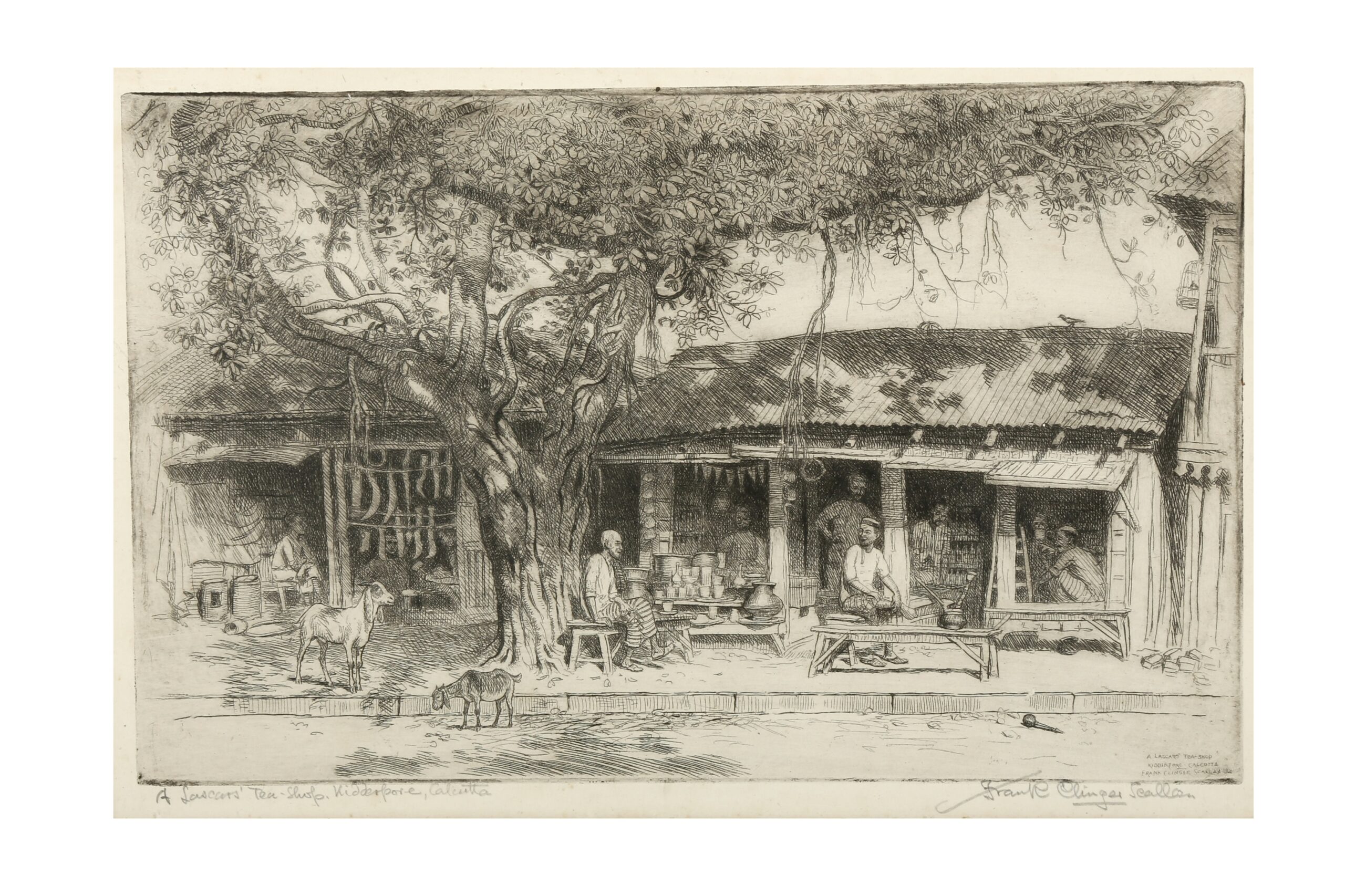
This interdisciplinary cluster moves away from traditional urban studies to reengage urban phenomena through a lens of social justice and the operations of power and governance. Drawing on traditions of urban history, it sees urban spaces as a palimpsest of historically evolving practices of living, adapting, regulating, and claiming spaces, facilities and resources. Based on the rich scholarship of critical urbanism, it will develop courses that will look closely into themes such as – architecture and built spaces; new forms of urban labour and work; histories of streets, slums and neighbourhoods; changing forms of commerce and consumption; contending rights to public spaces; and threats to environment and ecological sustainability. This cluster aims to develop a close focus around the city of Calcutta/Kolkata, encouraging new research and public projects on this city, while also expanding interests towards other small towns and cities of eastern and north eastern India.
Archives and Public Histories
As critical practice and new technologies intersect, there emerges new objects and ways of archiving. The documentation of manuscripts and texts have now been joined by the digitization of still and moving images, music and sound, oral histories, popular print cultures and other kinds of ephemera. Recently, even old websites have been archived, and efforts have now begun to find ways to archive performances or gestures by digital geometry. The classical tools of cataloguing, indexing and preserving are cross-fertilizing with technologies of digitization and file-sharing and even newer methods of digital tagging, visualization and text recognition – all of which now exist in an expanding toolkit of archiving. The task of archiving, once the preserve of hallowed institutions connected to the state, is now much more varied and taken up by a heterogeneous set of actors and communities. From individuals to companies and from hospitals to hobby groups, several people and institutions now collect, catalogue, and curate the diverse traces of the past. With this diversification has come a diversification of the audiences these collectors and collections serve. It is this intersection between a plural public history and archiving that will be the focus of this cluster. The cluster will both serve and study the communities of archivists, librarians, collectors, and others who participate in archiving and public history.
History and Anthropology
While the marriage of History & Anthropology has long been foretold, most extant iterations have either been anthropological inquiries with a short historical prelude, or historical research with an ethnographic postscript. This cluster will go beyond these limited unions and marshal critical methods from both disciplines to create a genuinely interdisciplinary toolkit to delve into issues of change and continuity in the everyday lives of people in South Asia and beyond, in the past and the present. It will undertake a critical look-back at the separate trajectories of these two disciplines and their shifting grounds of academic and professional practice over the 20th century, contrasting the Western scenario of the coming together of history, archaeology and anthropology, with the continuing institutional boundaries that hold them apart in the Indian context. Moreover, by studying the work of history itself ethnographically and the discipline of anthropology historically, the cluster will also relocate these preeminent academic disciplines as prominent sites for the complex interplay of knowledge and power. More generally, the cluster’s emphasis will be on developing productive and critical ways of combining archival and ethnographic methods of study.
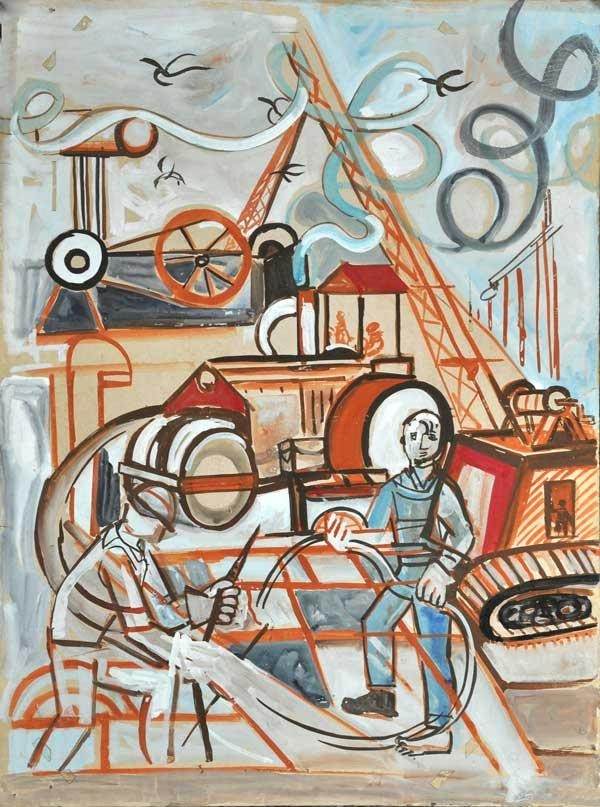
Art History and Visual Studies
This cluster will be studying the main methodological and conceptual shifts that have redefined the discipline of art history and the growth of the accompanying fields of visual culture and museum studies, as critical supplements to the older discipline. The cluster will offer compulsory courses in Research Methodologies and Vocabularies that will explore Art History’s interface with the more traditional Humanities and Social Sciences disciplines as well as with newer fields of Cultural and Media Studies and Digital Humanities. A key area of interest will be to explore the interface of object and image worlds, juxtaposing the place of original sites and artworks with the work of collection, reproduction, dissemination and circulation. It will also develop optional courses with a focus on the themes of nationalism and modernity, religion and politics, global and local entanglements that have shaped the art-worlds and art-institutions of modern South Asia. Students will be encouraged to develop a short research project bearing on these themes as part of the M.A. programme and first year of course work, before proceeding towards their larger four-year Ph.D. research.
History and Sociology of Science
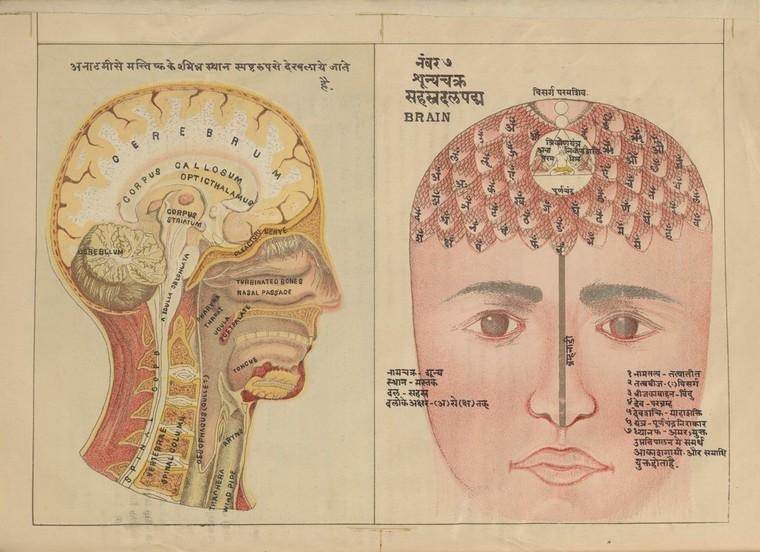
Science is all around us: sometimes in spectacular events, like space missions, and sometimes in more mundane choices, like a stream to study in high school. In its protean forms, science also intersects with many different arenas of social existence to produce new forms of economic activity (think apps and gig economy), new forms of policing (forensics and digital surveillance), new forms of artistic expression (bio art), or new forms of family life and kinship (surrogacy, genetic ancestry). In the shadow of these self-conscious versions of science, there also thrives the humbler bodies of organized knowledge of carpenters, fishermen, cowherds or farmers, which too might be called subaltern sciences. This cluster seeks to study science in all its many forms but always in relations to the larger social, economic, cultural, and political entanglements through which it becomes part of our shared history. The M.A. programme or the first year of Ph.D. course work will expose students to a range of scholarship and methodologies from History of Science, Science and Technology Studies, and Medical Anthropology, and include a research project to hone the application of these tools to newer themes. The Ph.D. programme will initially be dedicated mainly to pursuing the histories of modern science in South Asia.
Digital Humanities and Culture
This cluster will study a history of the Humanities in an age of digital computing and cultural informatics, by critically looking at themes such as – Database as form and its function in knowledge, art and governance; Open Networks, Digital Commons and New Legalities; Ethics and the Digital Community, and the Representation of Knowledge. The key objectives of the courses it will offer are as follows: (i) to outline multiple definitions of the digital humanities (ii) to explore debates about the digital humanities within the emerging field (iii) to apply digital techniques to archiving and data analysis (iv) to analyse data from multiple sources (including social media) by applying a set digital tools and software (v) to understand the applications of artificial intelligence; (vi)and to create digital tools for data-mining and analysis. Some of the main modules to be taught are – Software Studies in Humanities; Digital Cartography; Scholarly Editions Online; Statistics for Digital Humanities; Digital Ethnography; Electronic Literature and Game Studies.