Football arrived in Bengal as part of the sporting culture of the British Empire, first played by soldiers, civil servants, merchants, and students in colonial Calcutta. By the late nineteenth century, however, the game had begun to acquire a distinctly local character. Bengali, Anglo-Indian, and other Indian communities embraced football with remarkable enthusiasm, founding clubs, organizing competitions, and transforming a colonial pastime into a popular urban sport.
The establishment of the Indian Football Association (IFA) in 1893 provided a formal structure for the game, although its administration remained overwhelmingly European. Indian clubs nevertheless multiplied. Institutions such as Sovabazar Club, Aryan Club, National Association, and, most famously, Mohun Bagan (founded in 1889) nurtured generations of players who challenged prevailing racial assumptions about physical ability, discipline, and sporting excellence.
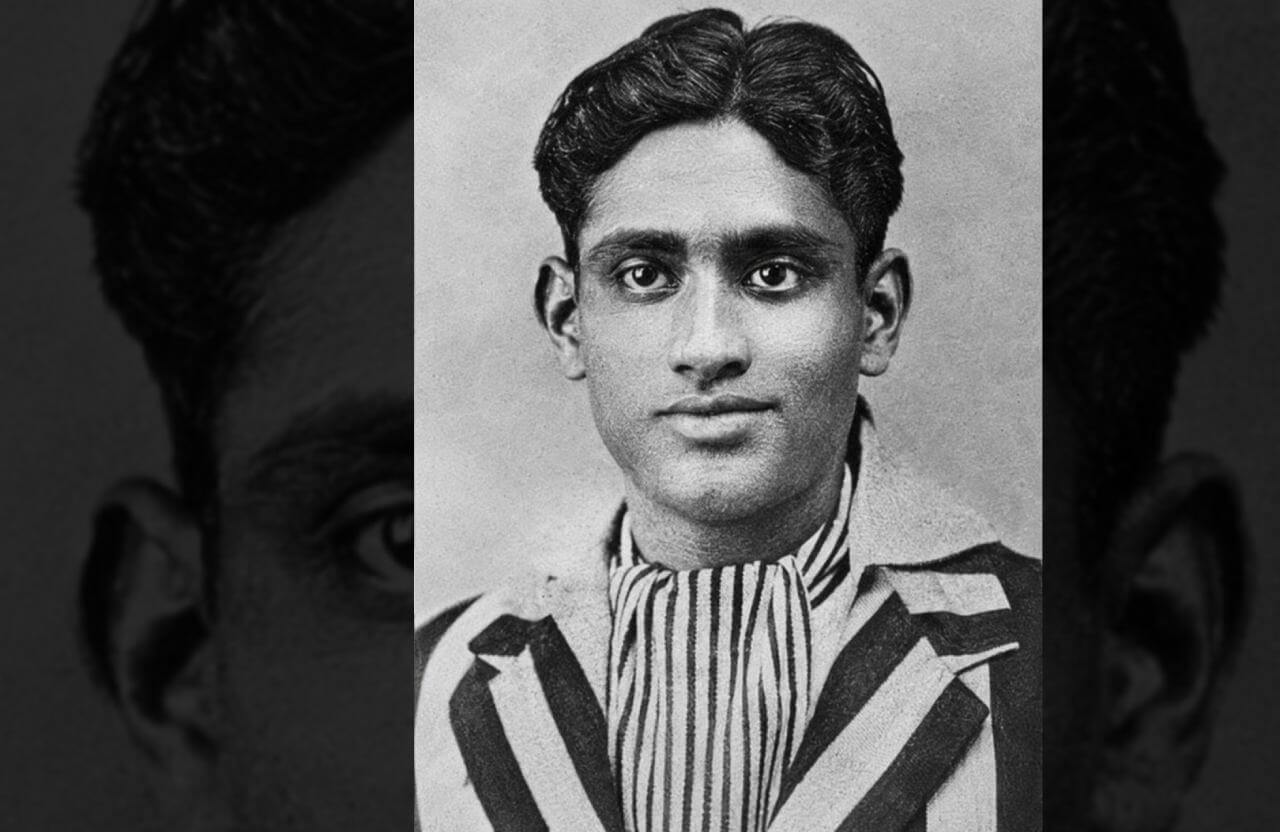
Among the pioneers were figures such as Nagendra Prasad Sarbadhikari, often remembered as the ‘father of Indian football,’ whose efforts popularized the game among Bengali youth. Early players, organizers, patrons, and supporters created a vibrant football culture that extended from schools and colleges to neighbourhood grounds and public tournaments.
By 1911, football in Bengal had become far more than recreation. It had emerged as a powerful arena for civic pride, collective identity, and aspirations for equality within a colonial society—laying the foundations for one of the most significant moments in Indian sporting history.
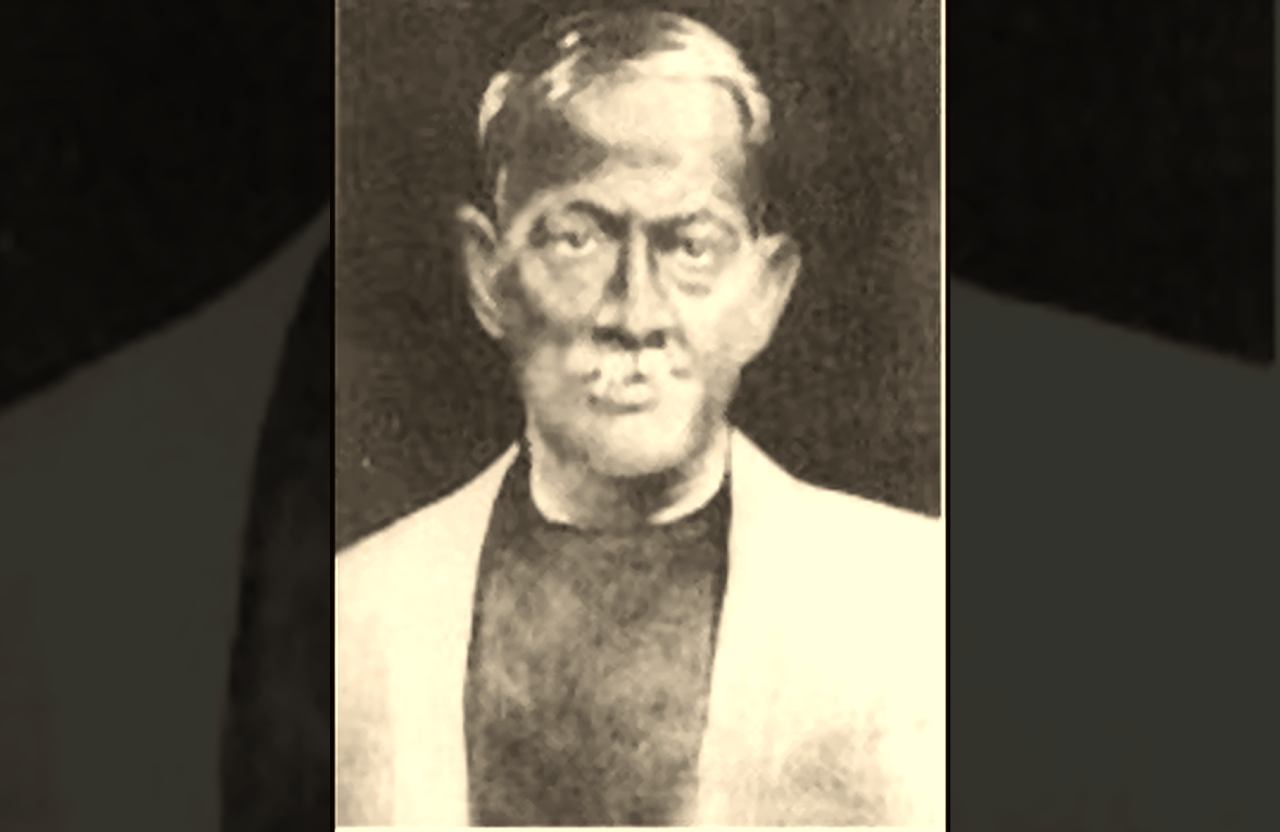
Nagendra Prasad Sarbadhikari (1869-1940), the pioneering figure of football in Bengal and India
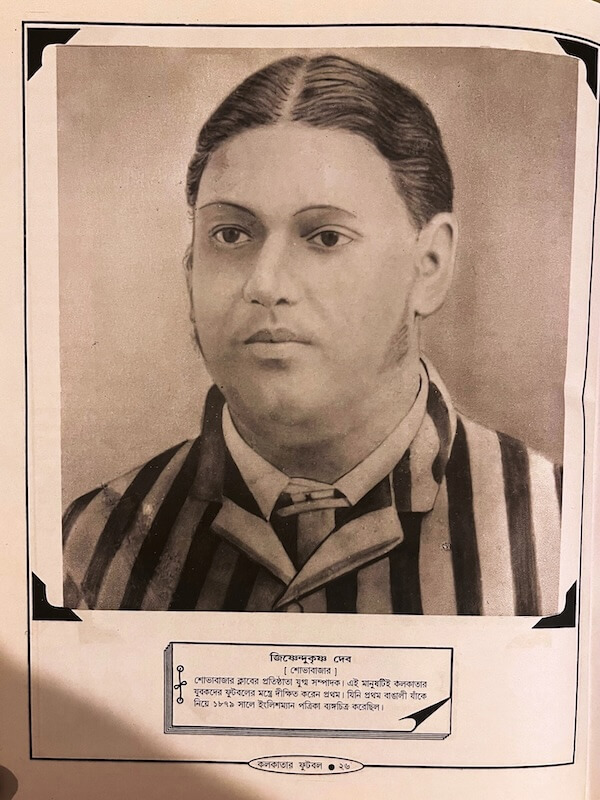
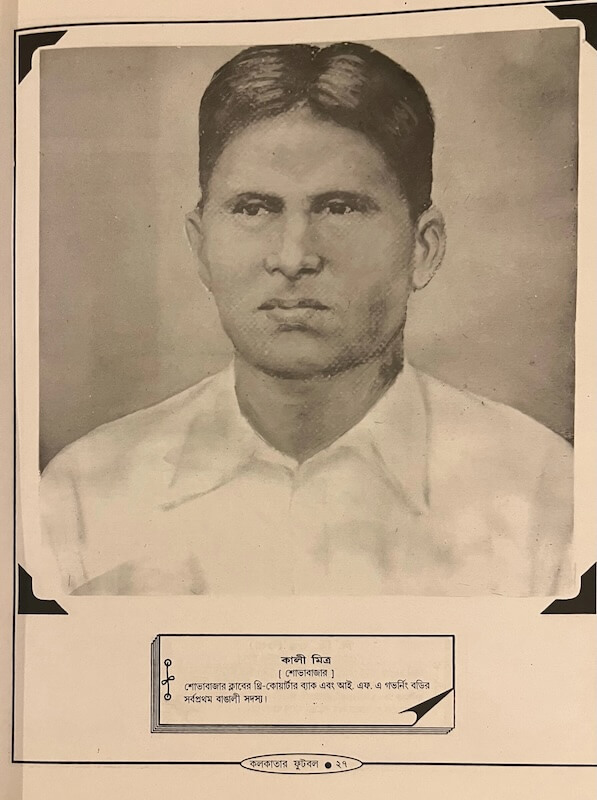
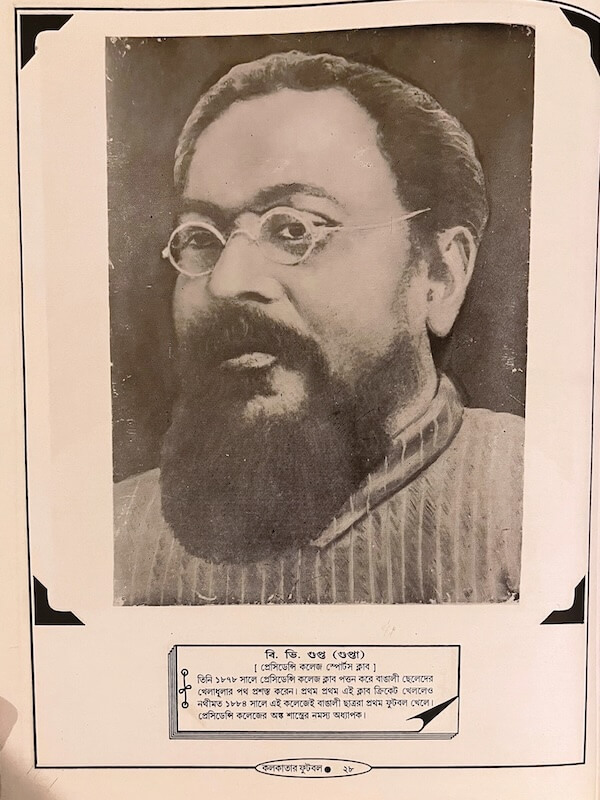
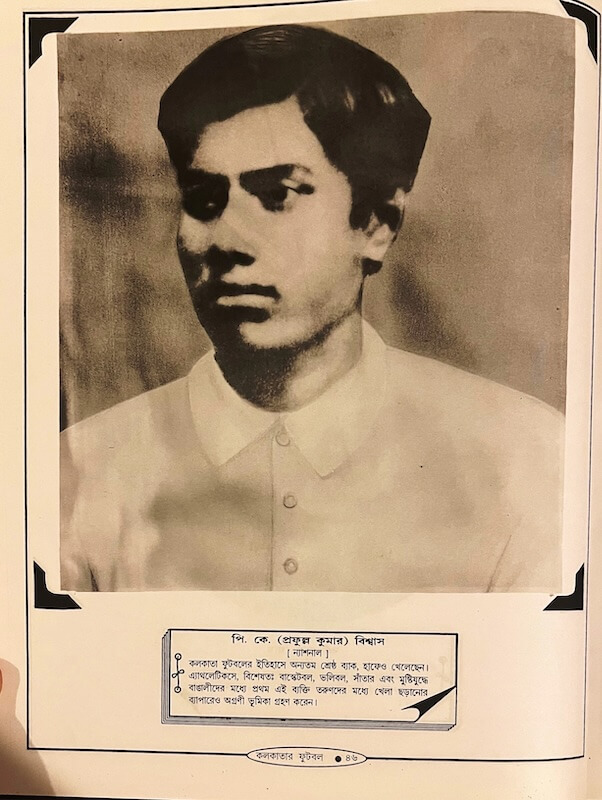
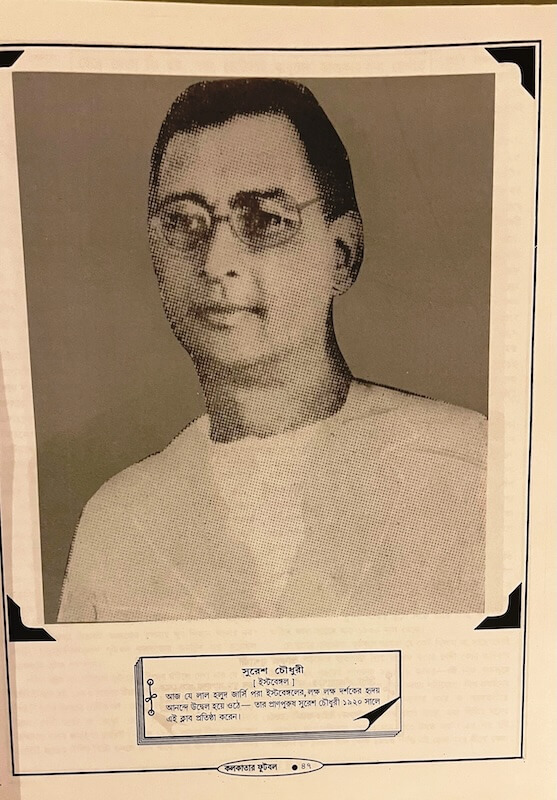
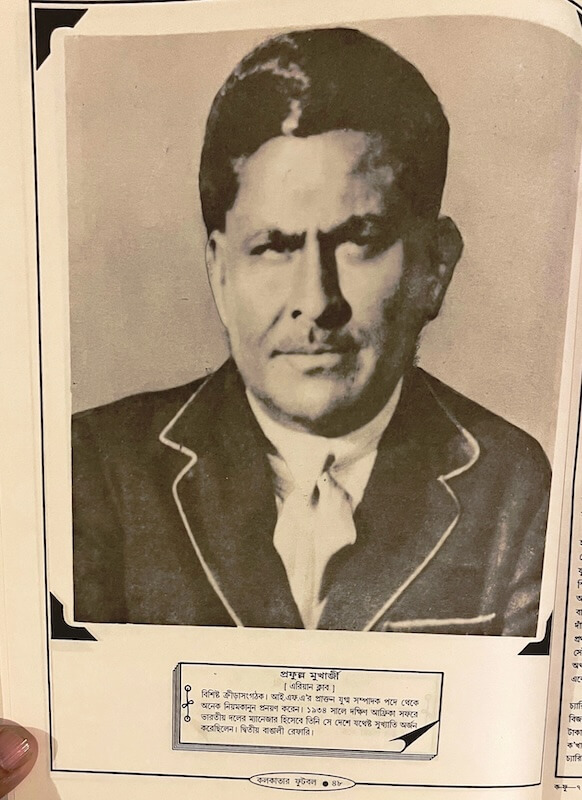
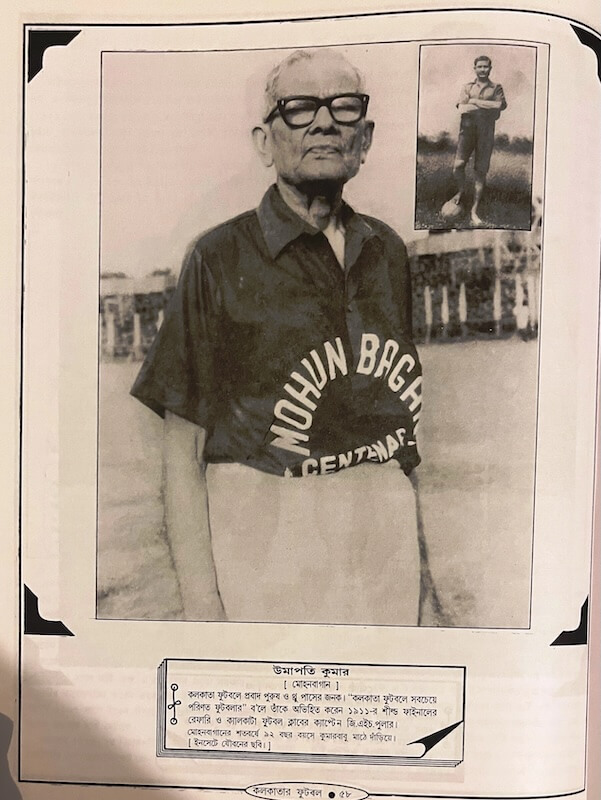
An extremely talented batch of footballers
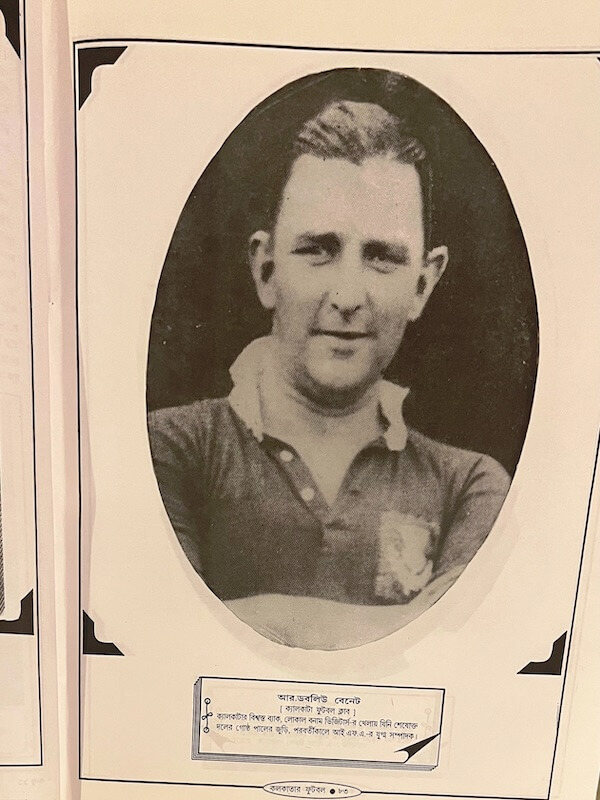
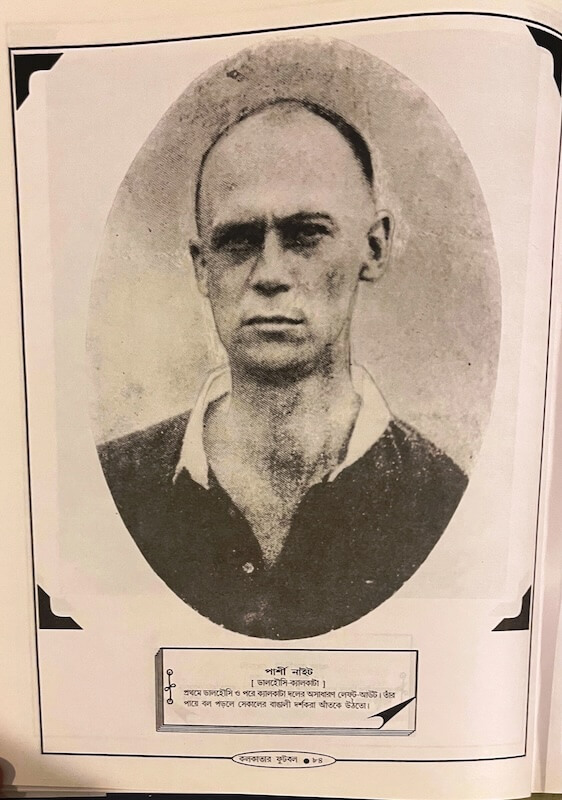
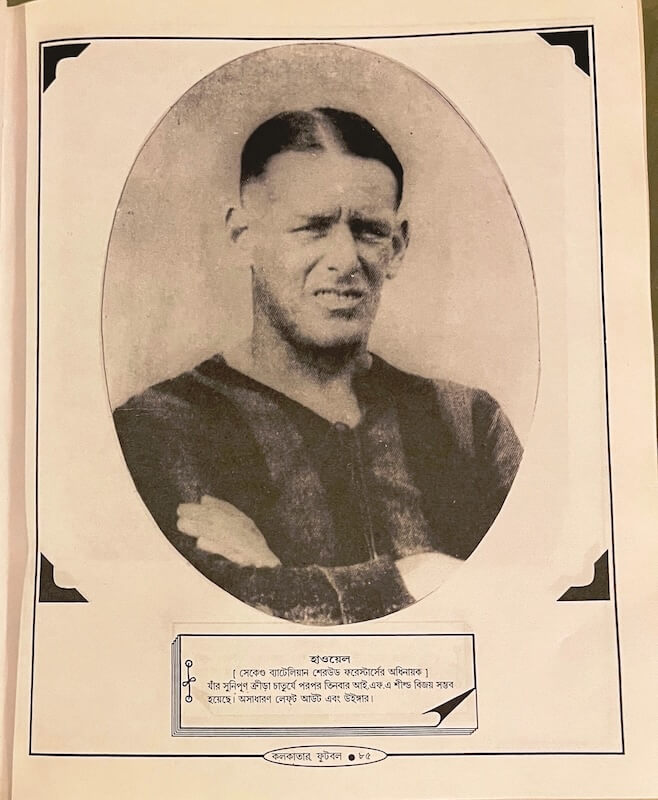
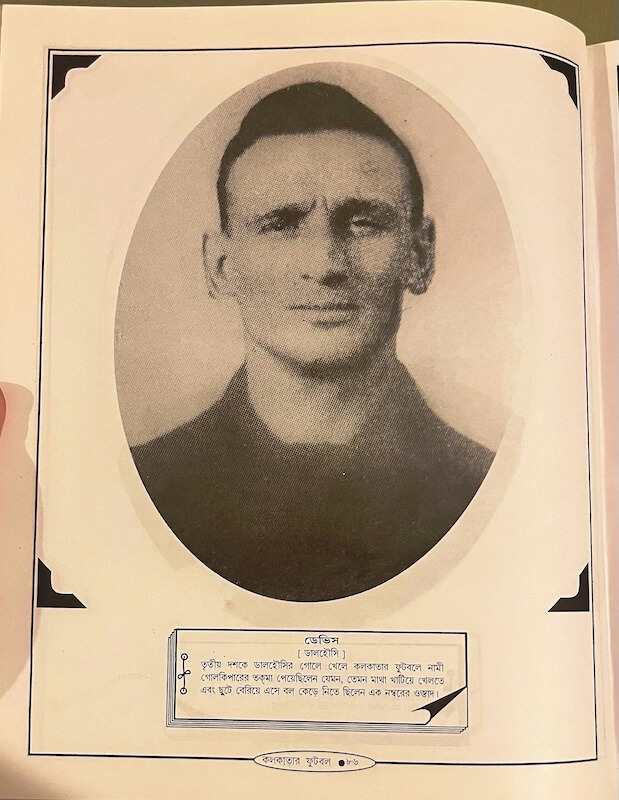
including quite a few British players – lit up the Maidan at the turn of the nineteenth century and during the first couple of decads of the twentieth. This hall of fame features some of them who succeeded Nagendra Prasad Sarbadhikari
Jishnendu Krishna Deb
(Sovabazar)
Kalicharan Mitra
Kali Mittir (Sovabazar)
B. V. Gupta
(Presidency College Sports Club)
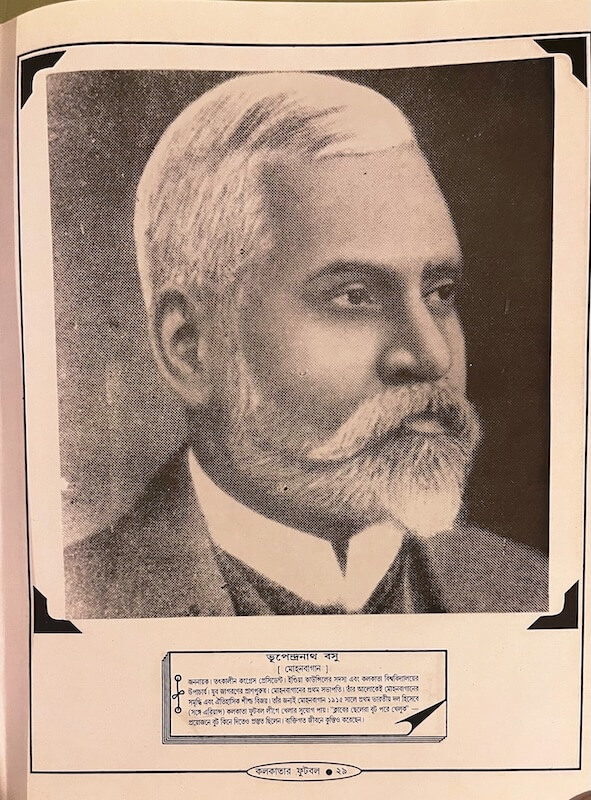
Bhupendranath Bose
(Mohun Bagan)
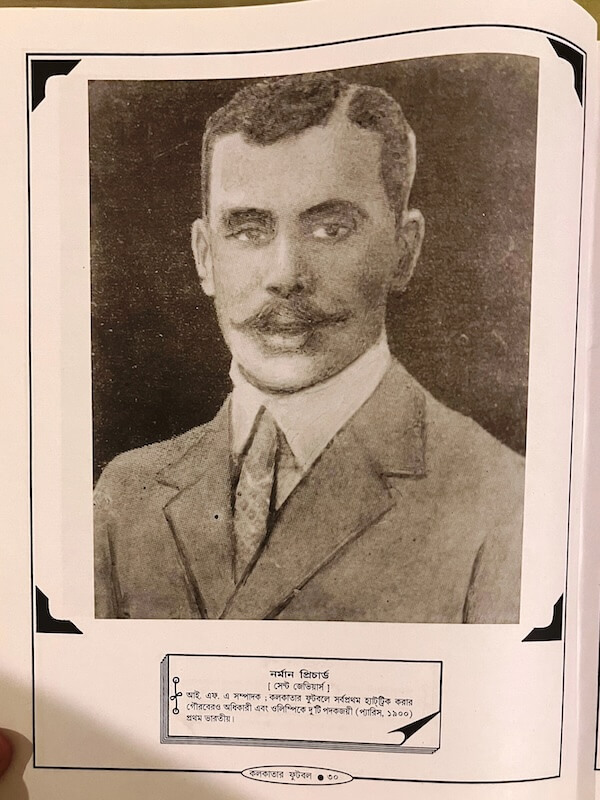
Norman Pritchard
(St. Xaviers)
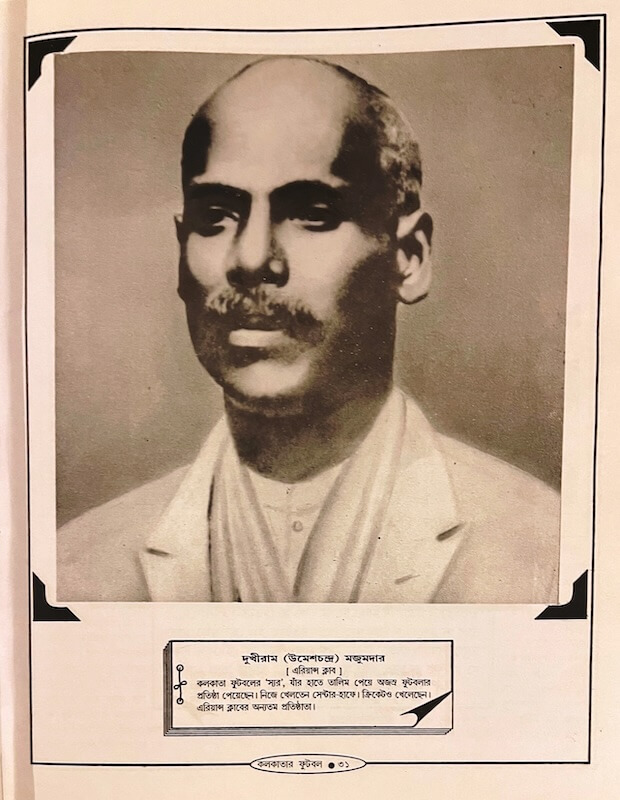
Oomesh Chandra "Dukhiram" Majumdar
(Aryans)
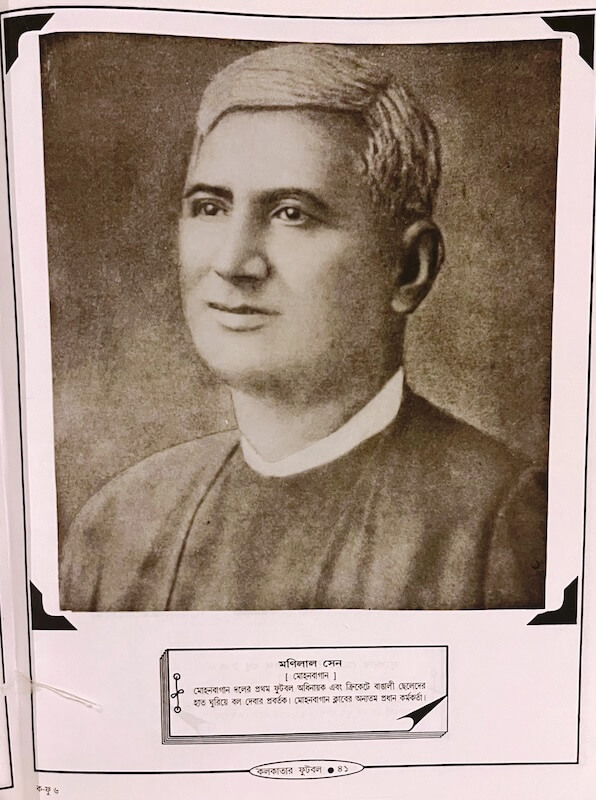
Manilal Sen
(Mohun Bagan)
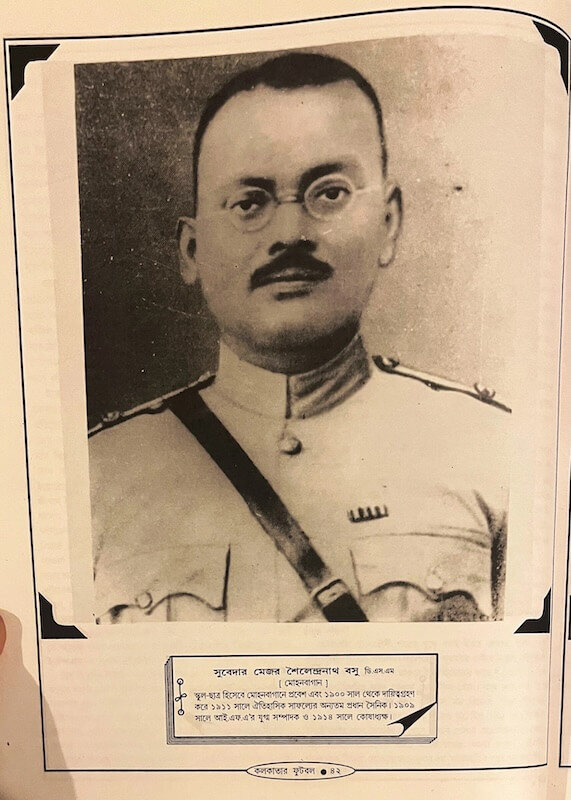
Sailendra Nath Bose
(Mohun Bagan)
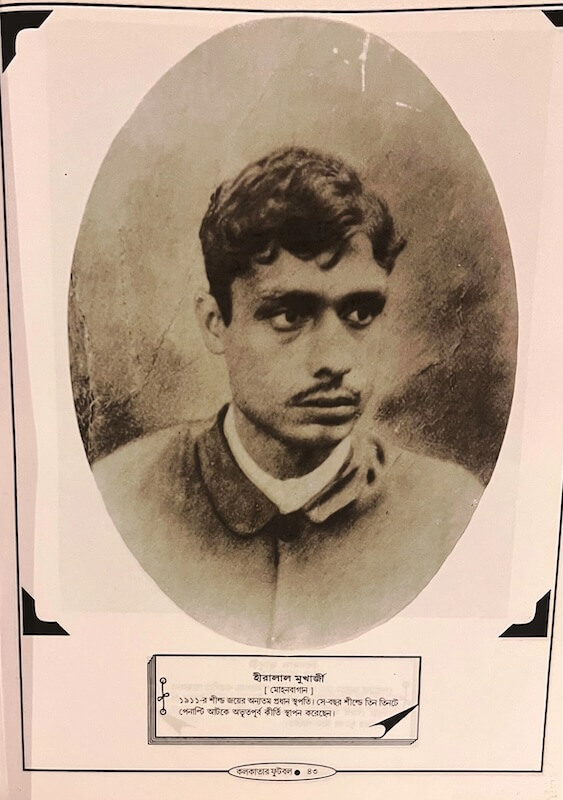
Hiralal Mukherjee
(Mohun Bagan)
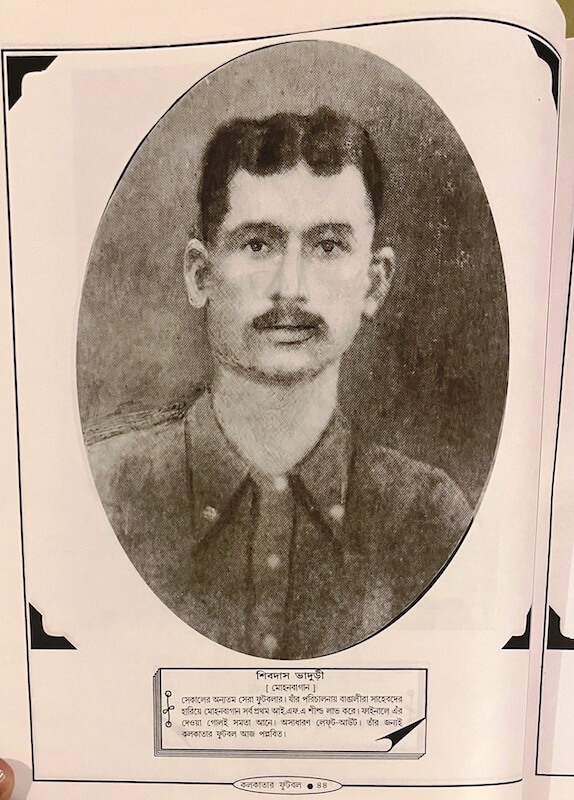
Shibdas Bhaduri
(Mohun Bagan)
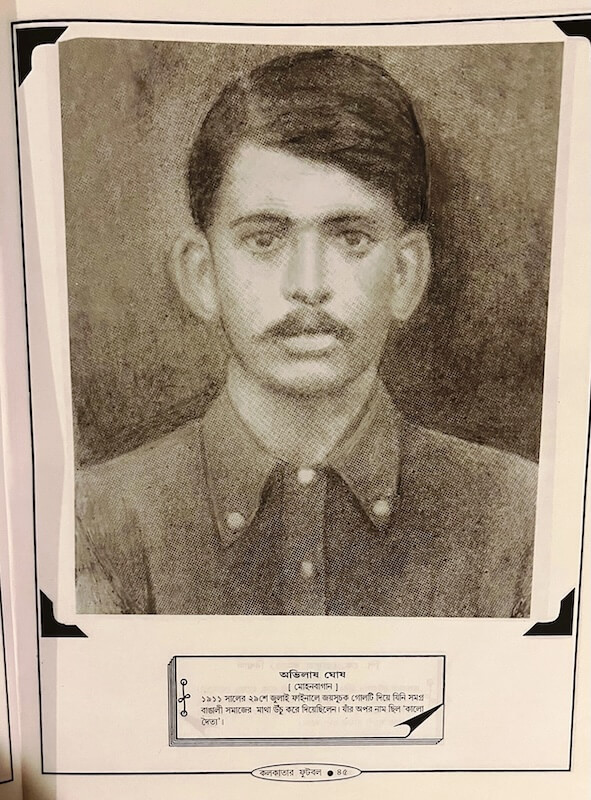
Abhilash Ghosh
(Mohun Bagan)
Prafulla Kumar Biswas
(National Club)
Suresh Chandra Chaudhuri
(East Bengal)
Prafulla Mukherjee
(Aryans)
Umapati Kumar
(Mohun Bagan)
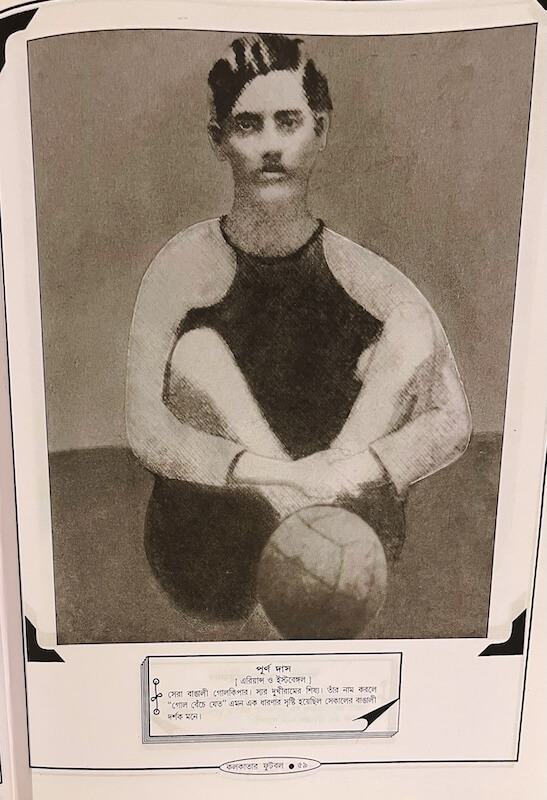
Purna Das
(Aryans & East Bengal)
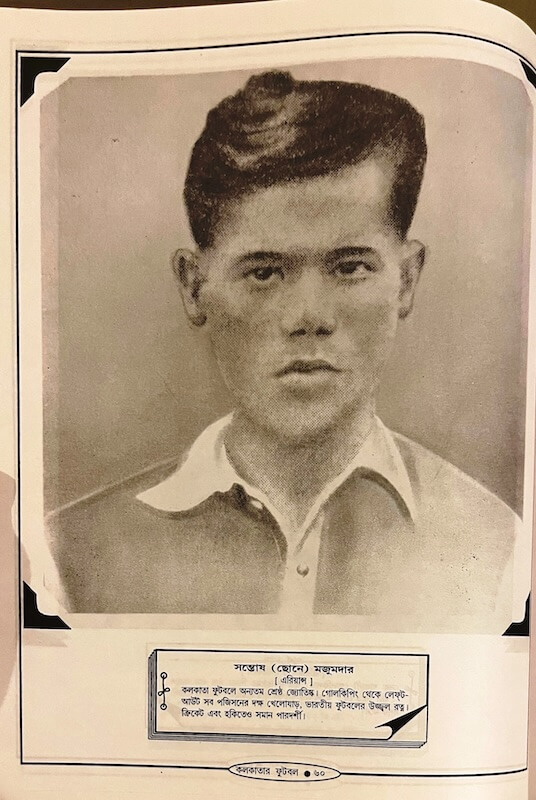
Santosh "Chhone" Majumder
(Aryans)
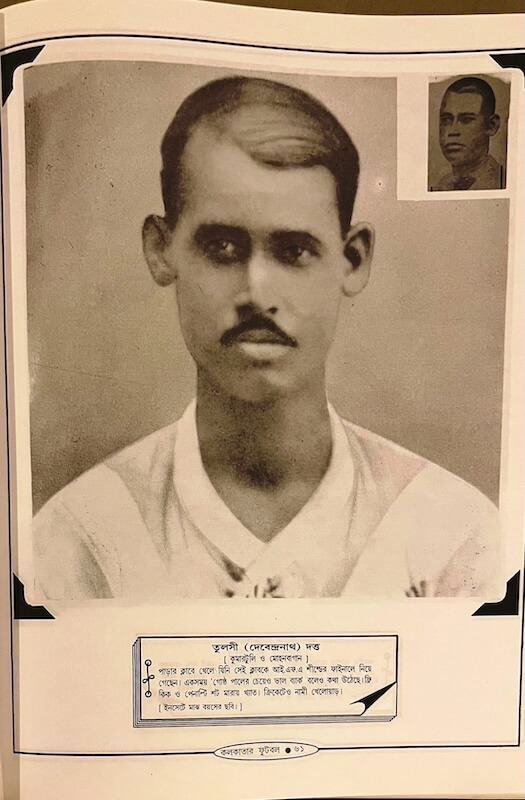
Tulsi (Debendranath) Dutta
(Kumartuli & Mohun Bagan)
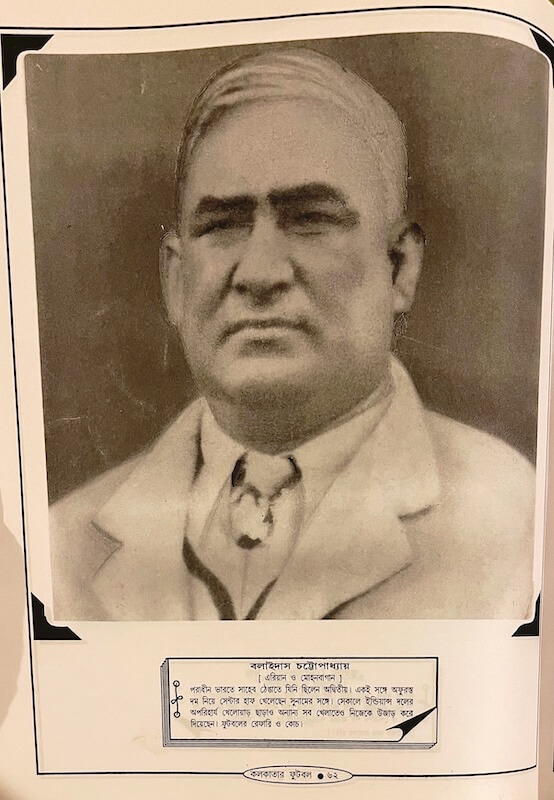
Balai Das Chatterjee
(Aryans & Mohun Bagan)
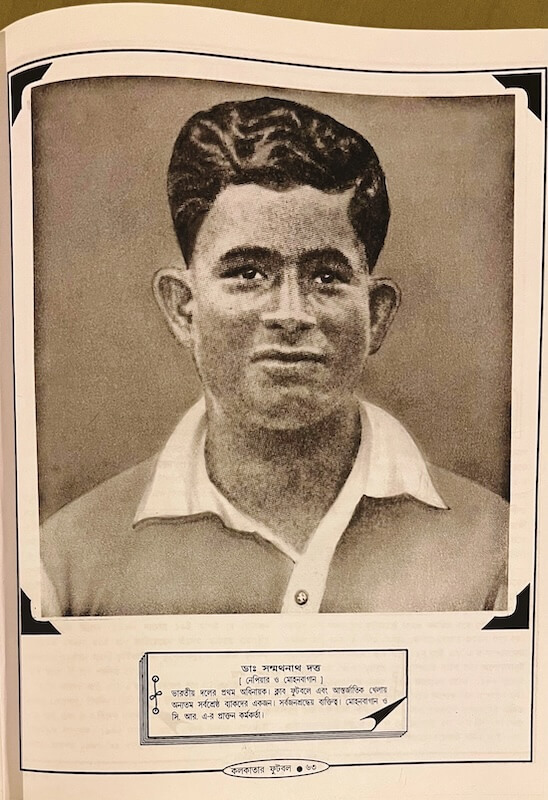
Dr. Sanmatha Nath Dutta
(Mohun Bagan)
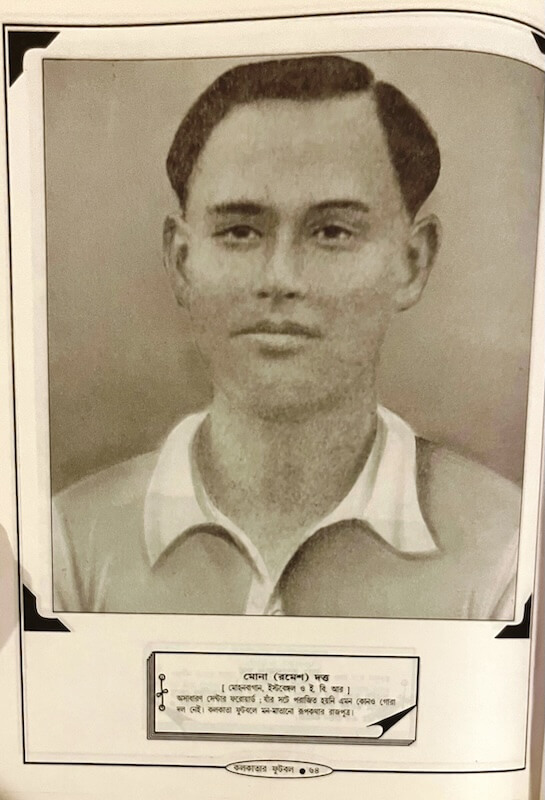
Ramesh Chandra "Mona" Dutta
(Mohun Bagan, East Bengal & Eastern Bengal Railway)
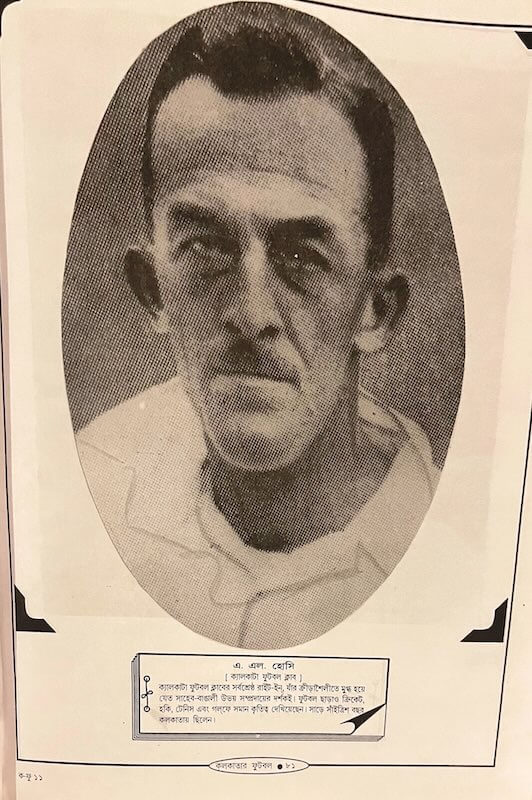
A. L. Hosey
(Calcutta Football Club)
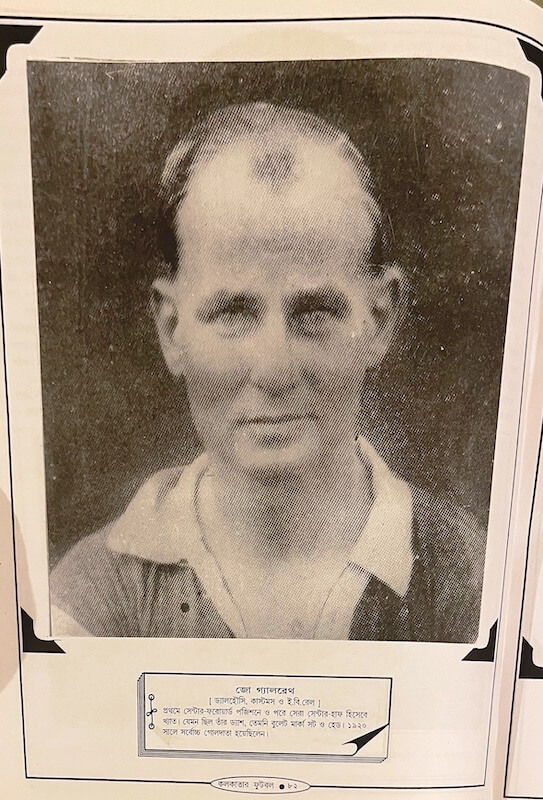
Joe Galbraith
(Dalhousie, Customs & Eastern Bengal Railway)
R. W. Benett
(Calcutta Football Club)
Percy Night
(Dalhousie & Calcutta Football Club)
Howell
(Sherwood Foresters)
Davis
(Dalhousie)
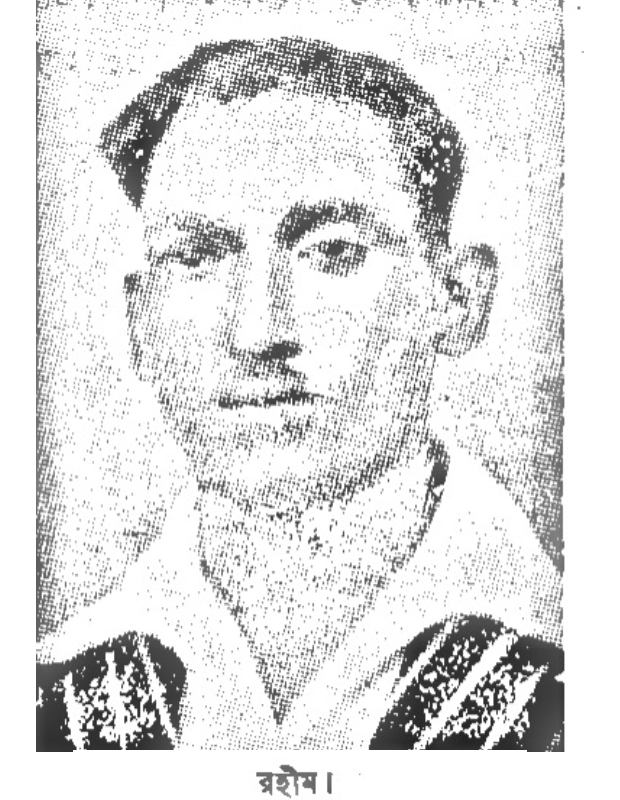
Mohammad Abdur “Dumdum Bullet” Raheem
(Mohammadan Sporting)
1911-1947
The decades between Mohun Bagan’s famous 1911 triumph and Indian independence witnessed the transformation of football from a colonial pastime into Bengal’s most popular mass sport. Across Calcutta, clubs multiplied, crowds grew larger, and football became deeply woven into the social and political life of the city. The game provided new opportunities for Indian players to demonstrate skill, discipline and leadership on a stage long dominated by European teams.
This period saw the rise of outstanding footballers whose reputations extended far beyond the Maidan. Players such as Gostho Pal, Shibdas Bhaduri, Mohammed Salim and Noor Mohamed became sporting heroes, celebrated for their technical excellence and competitive spirit. The growth of clubs including Mohun Bagan, Mohammedan Sporting, and East Bengal reflected broader social changes, drawing support from different communities and migrant populations.
Football grounds became spaces where questions of identity, belonging and prestige were publicly contested. Newspapers devoted increasing attention to matches, while illustrated magazines, cartoons and advertisements testified to the game’s growing cultural reach. By 1947, football had become one of the most powerful symbols of urban Bengal, creating traditions, rivalries and loyalties that would continue to shape the region’s sporting culture long after independence.
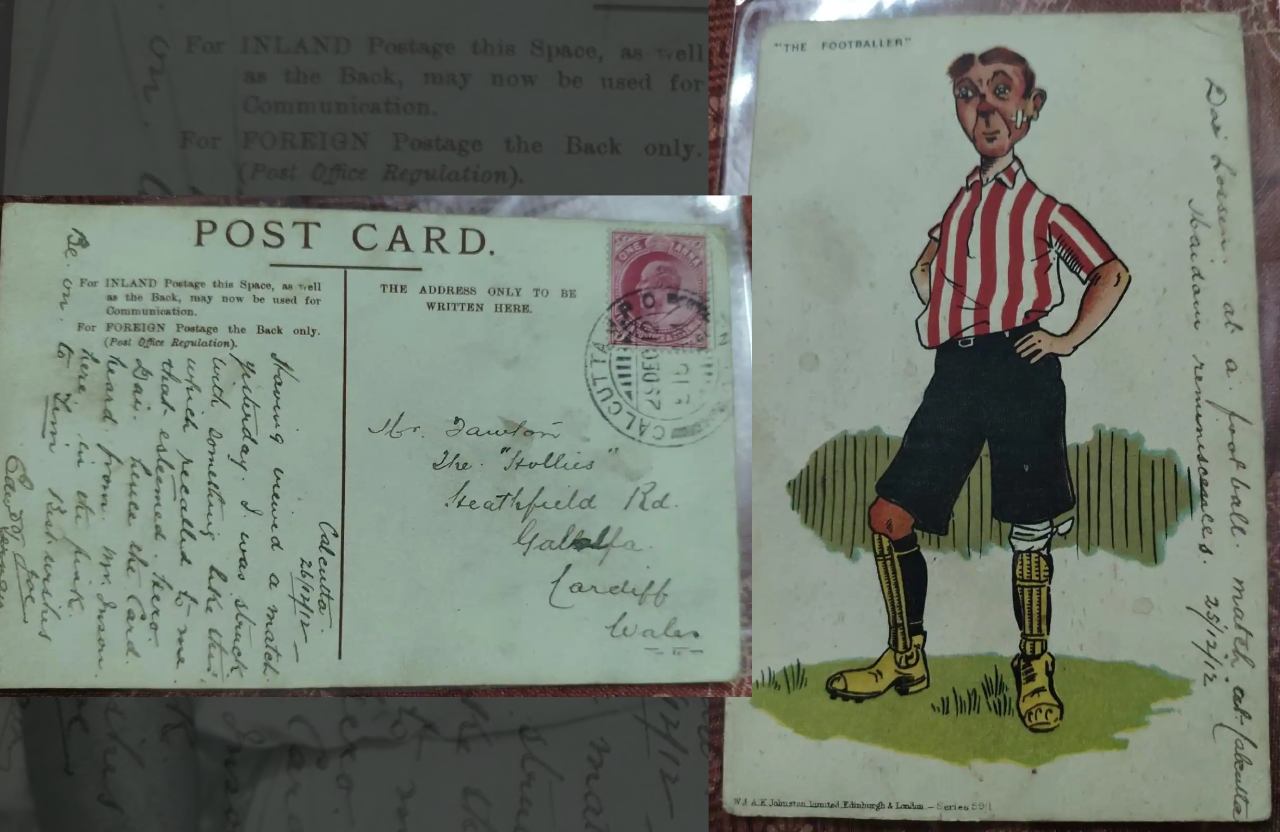
A postcard written in December 1912 describing a football match on the Maidan in Calcutta. The author of the postcard, who was probably from Wales, wrote to his friend that seeing the game he had been reminded of “that esteemed Hero Dai”. A reference most likely to the famous David “Dai” Davies (1880-1944) who played for Bolton Wanderers and the Welsh national team. Interestingly, Davies also played Rugby Union, as did many of the Calcutta footballers of the time. Card from the collection of Kaushik Bhattacharyya.
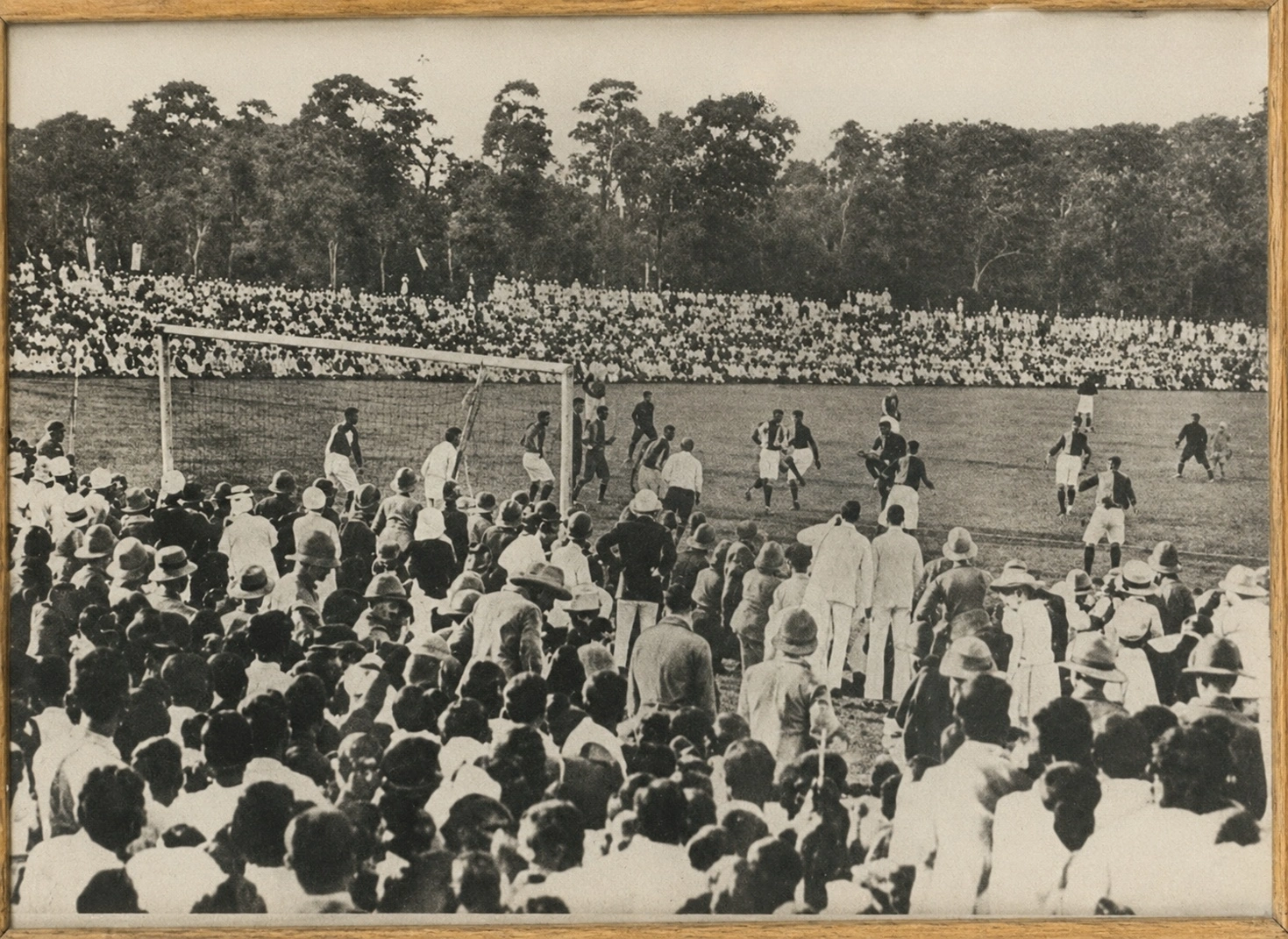
Historic day in the history of Indian sport and nationalism - Indian Football Association (IFA) Shield final on 29 July 1911, in which Mohun Bagan beat East Yorkshire Regiment 2-1. (Wikimedia Commons)
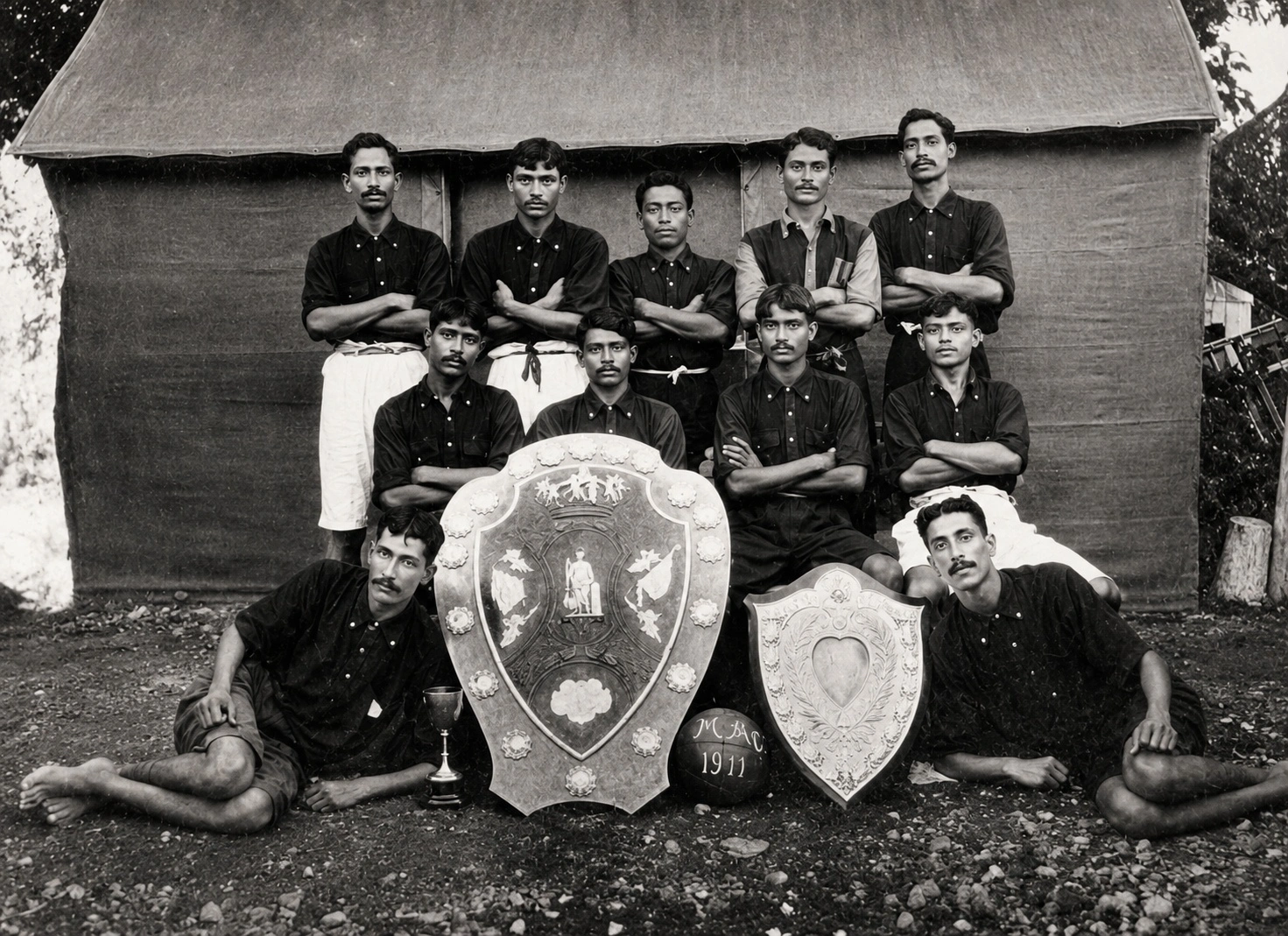
Mohun Bagan Athletic Club team celebrating their historic 1911 IFA Shield victory, a monumental event in Indian sports history where an all-Indian team defeated a British regiment, East York.
Victorious Mohun Bagan team in 1911. (Photo source: Royal Historical Society)
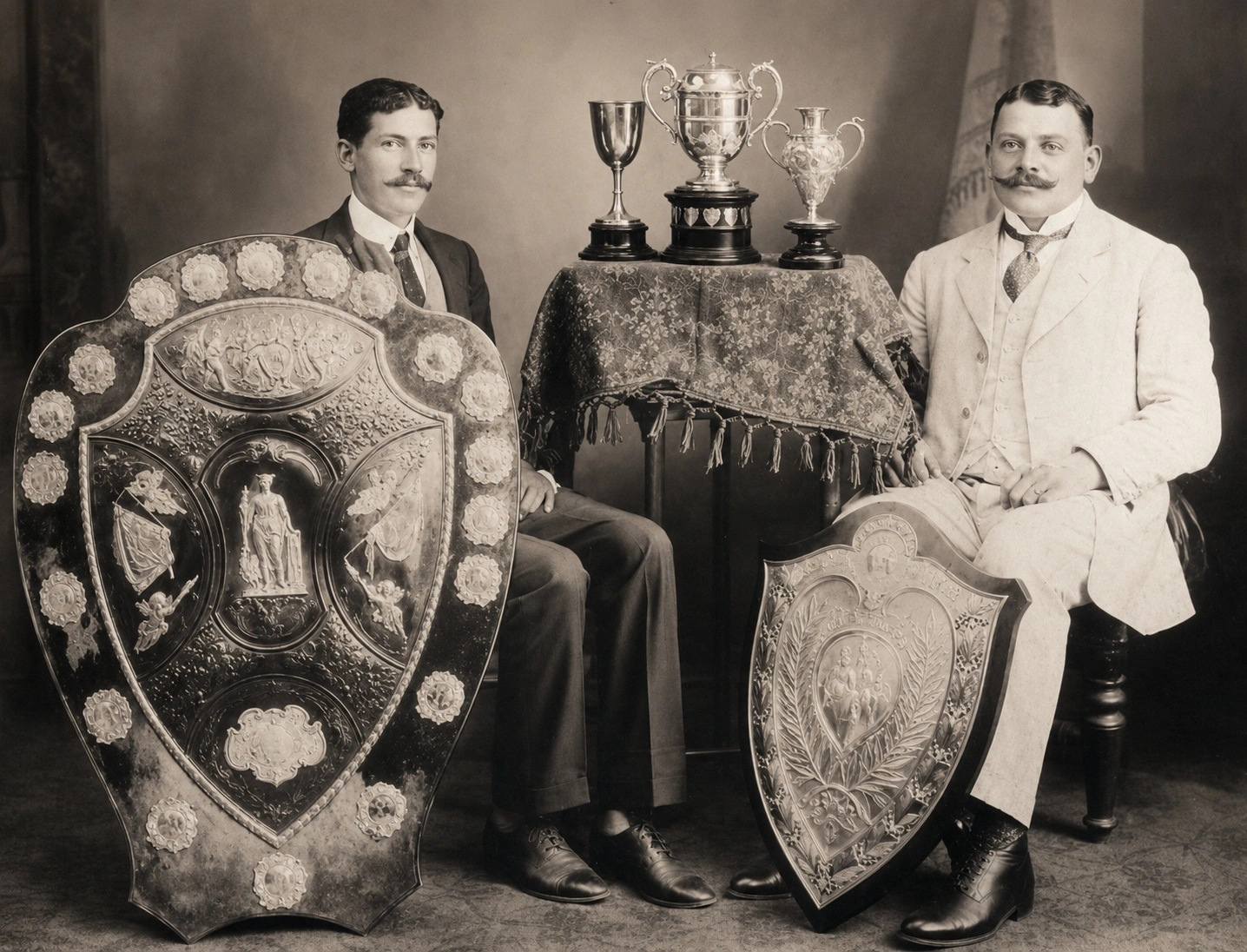
Shibdas Bhaduri (left) and Sailendra Nath Bose with the IFA Shield and Mohun Bagan’s other trophies. (Image credit: Mohun Bagan 1911 by Paresh Nandy)
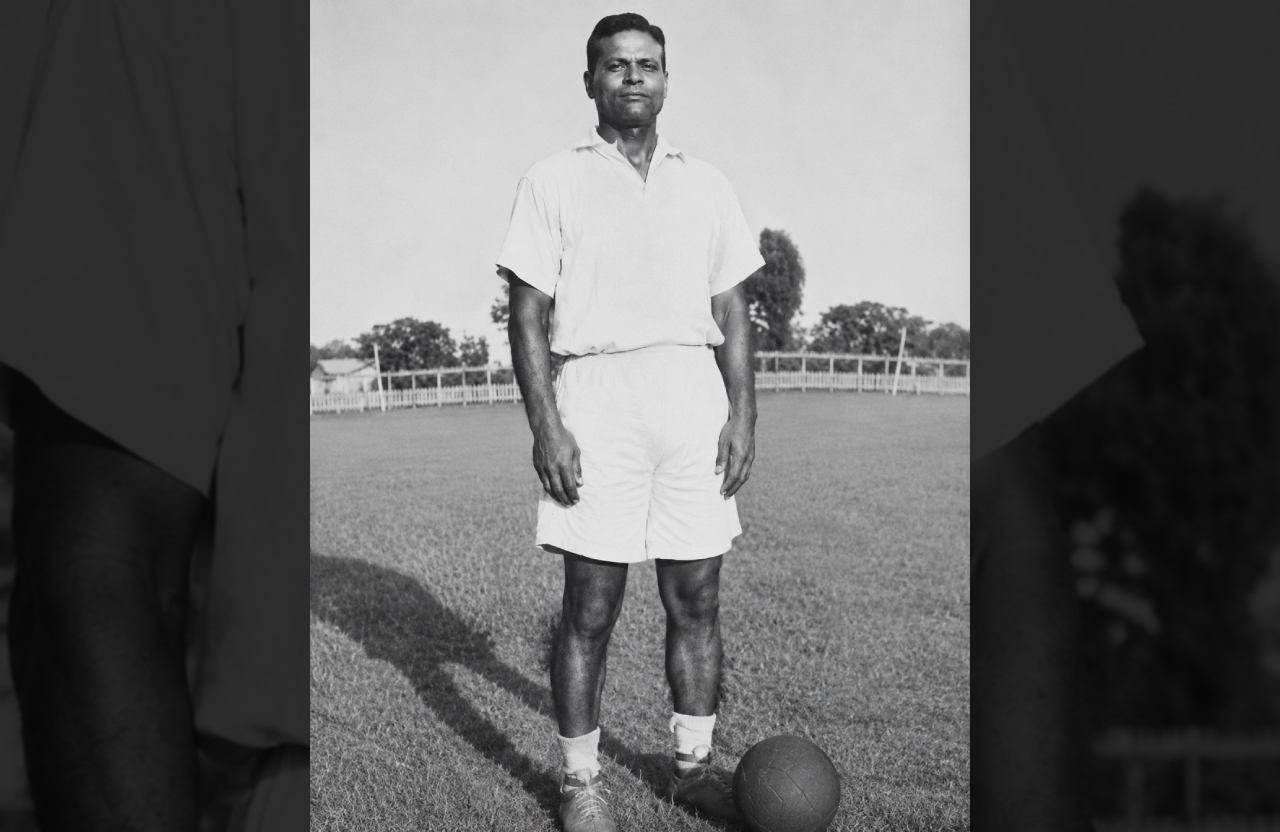
Gostho Pal (1896-1976), Mohun Bagan’s impregnable defender
Nicknamed the ‘Chinese Wall,’ Gostho Pal transformed the defender into a figure of strength and discipline. As one of Mohun Bagan’s great early icons and the first footballer to receive the Padma Shri, he showed how Bengal football could turn bodily courage into public memory.
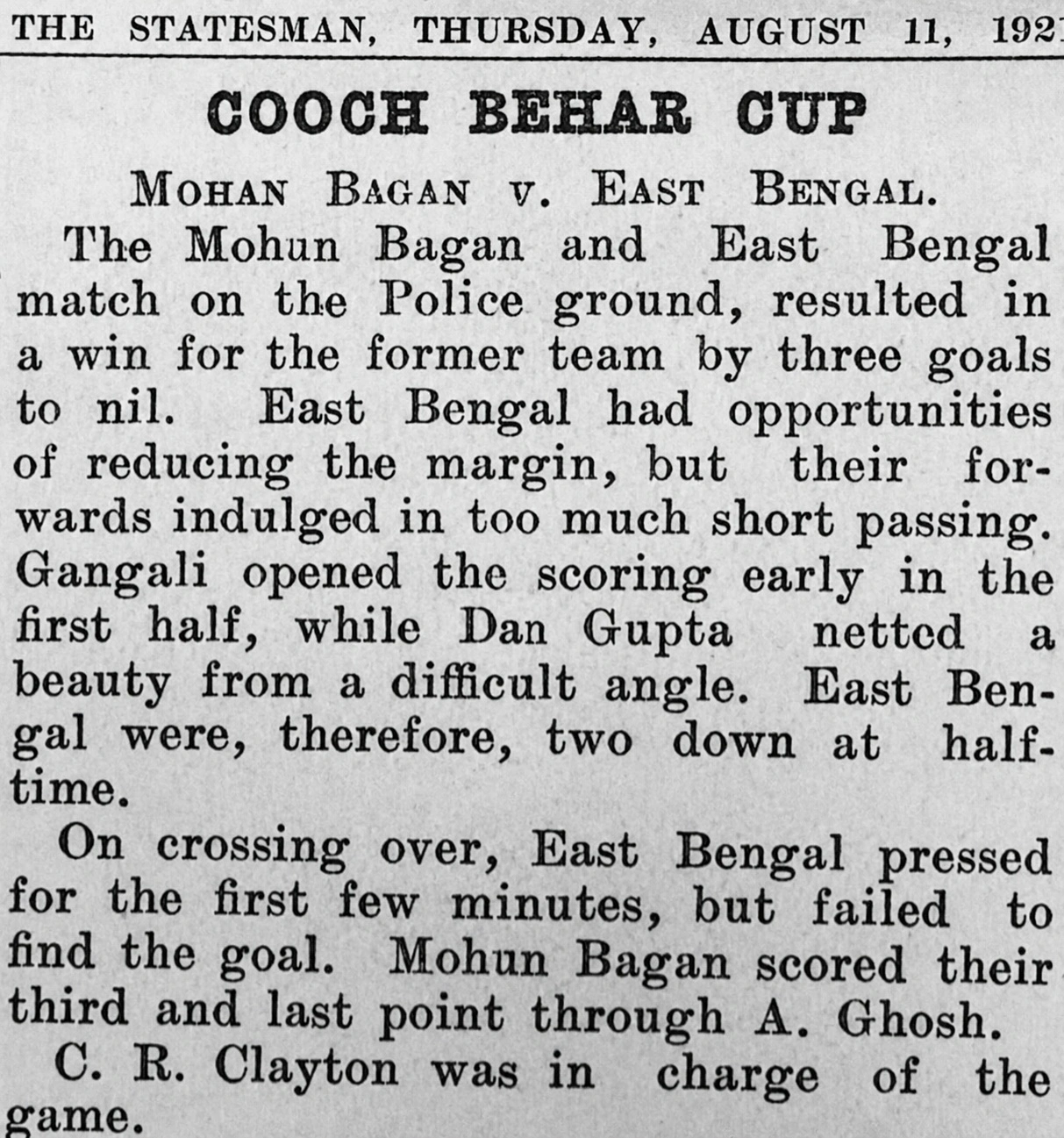
The Statesman’s report on 11 August 1921 on one of the first matches played between Mohun Bagan and East Bengal in the semi-final of Cooch Behar Cup, which Mohun Bagan won 3-0 (Creative Commons - photo by Debankan Mullick https://commons.wikimedia.org/w/index.php?curid=121584258)
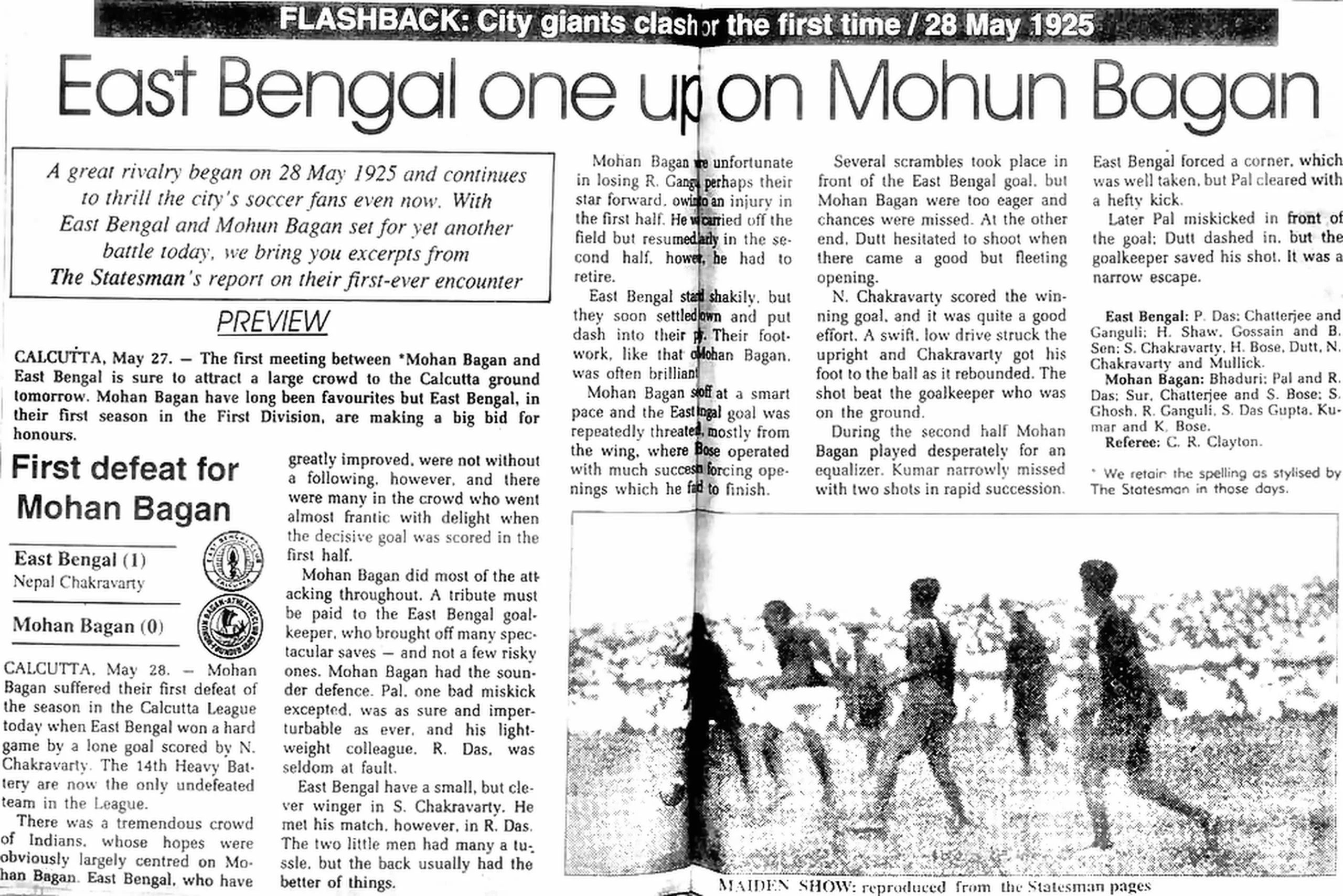
The Statesman’s report on the first official ‘Kolkata Derby’, a match between Mohun Bagan and East Bengal in the Calcutta League on 28 May 1925. East Bengal won 1-0. (The Statesman)
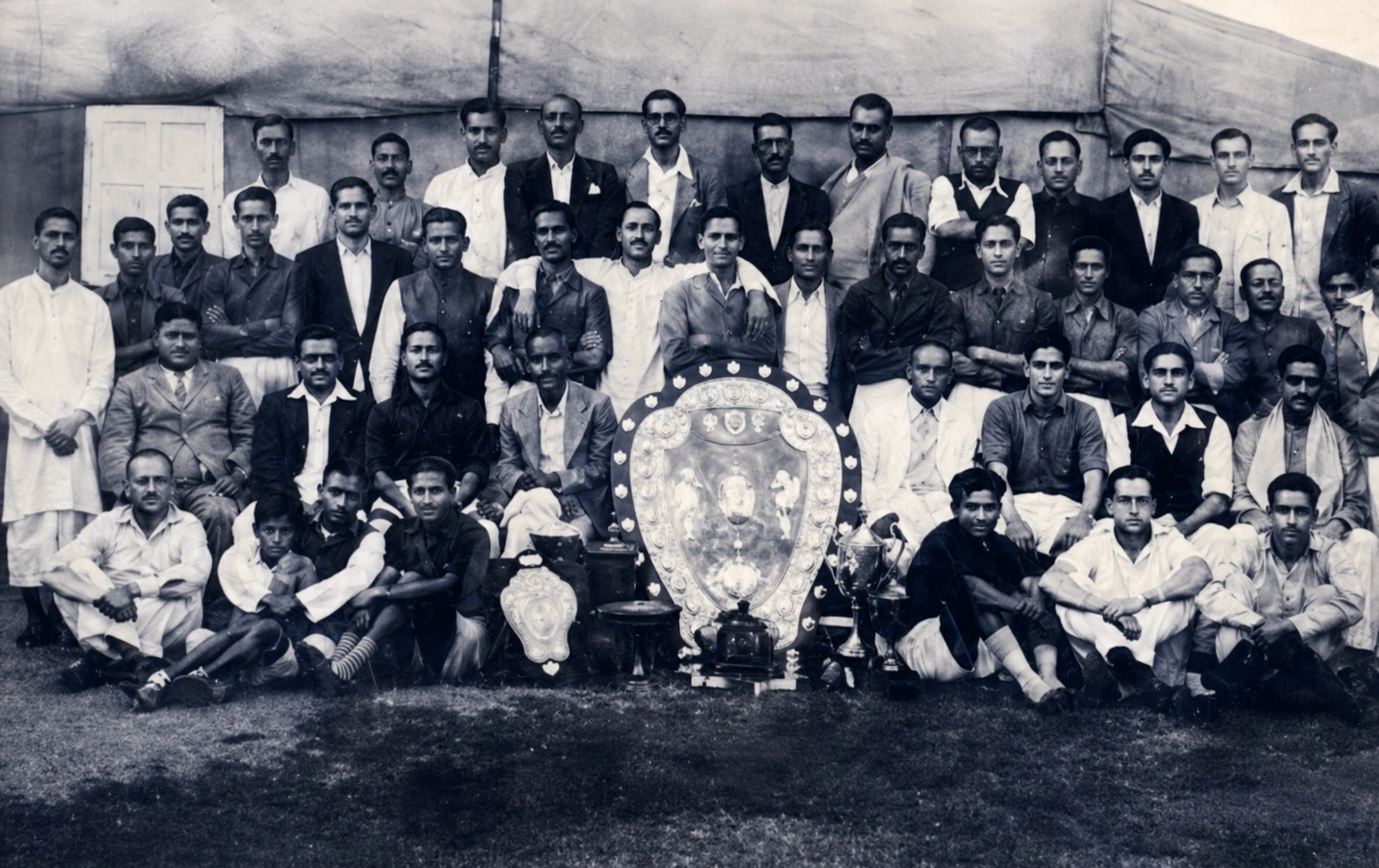
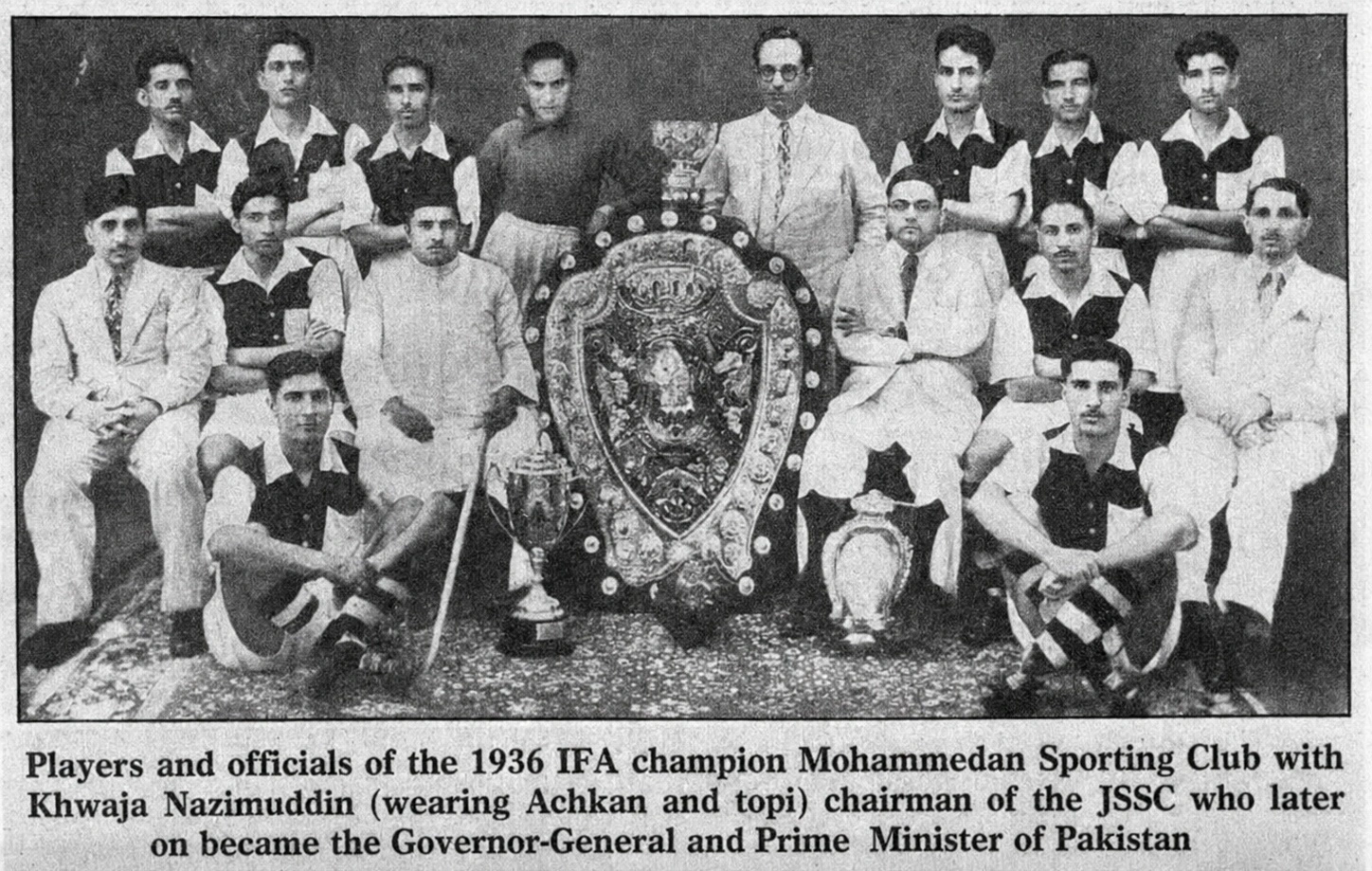
Players and officials of the 1936 IFA champion Mohammedan Sporting Club with Khwaja Nazimuddin, (wearing Achkan and topi) chairman of the MSC, who later became Governor-General and Prime Minister of Pakistan. (from Mirza Hasan, ‘Football and nationalisms in Bengal’, The Daily Star, 22 July 2018)
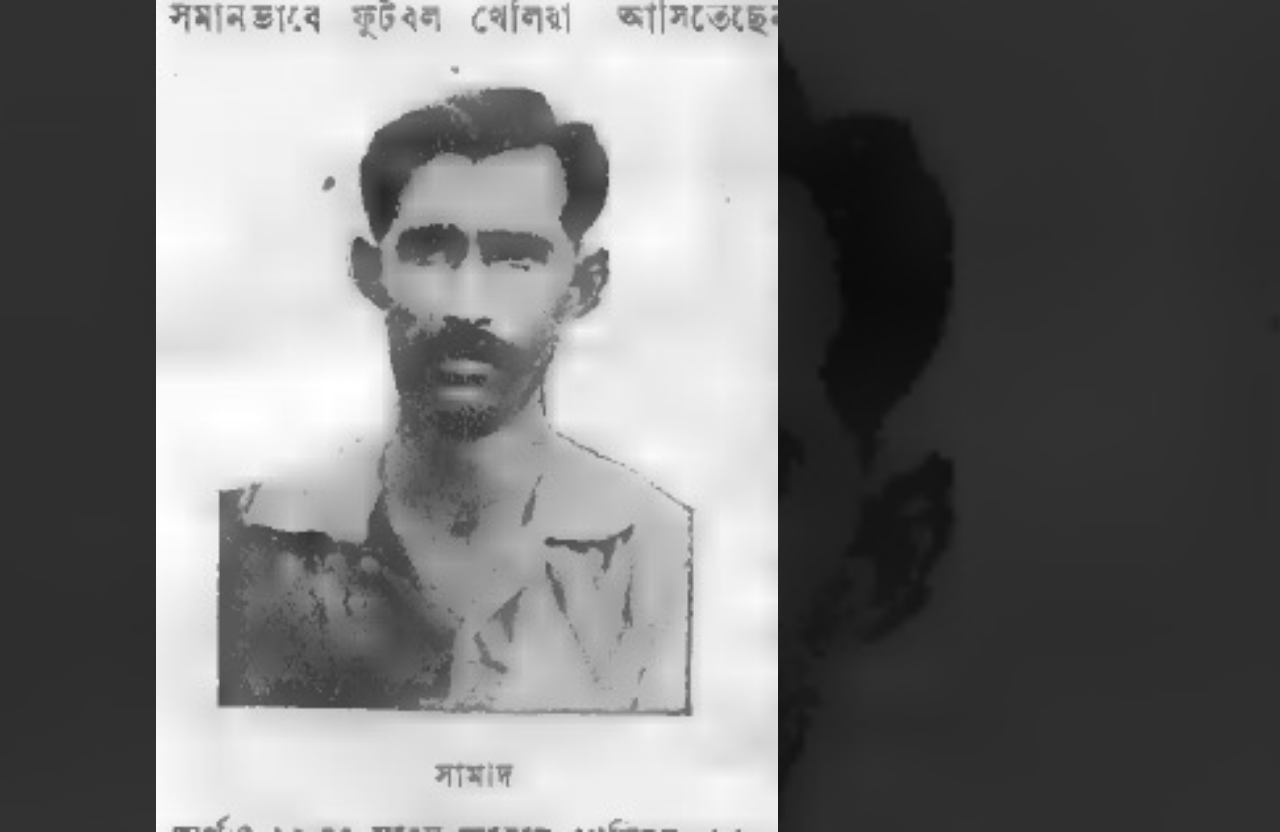
Syed Abdus Samad (1895-1965) Known as “football’s wizard”, Samad played for several clubs including the top three, Mohun Bagan, East Bengal, and Mohammadan Sporting. He also captained India in the 1920s in several international matches. In a legendary match in 1927, played in Peking, India was trailing 3-0 to China when Samad came on as a substitute and scored four consecutive goals to deliver India a 4-3 win!
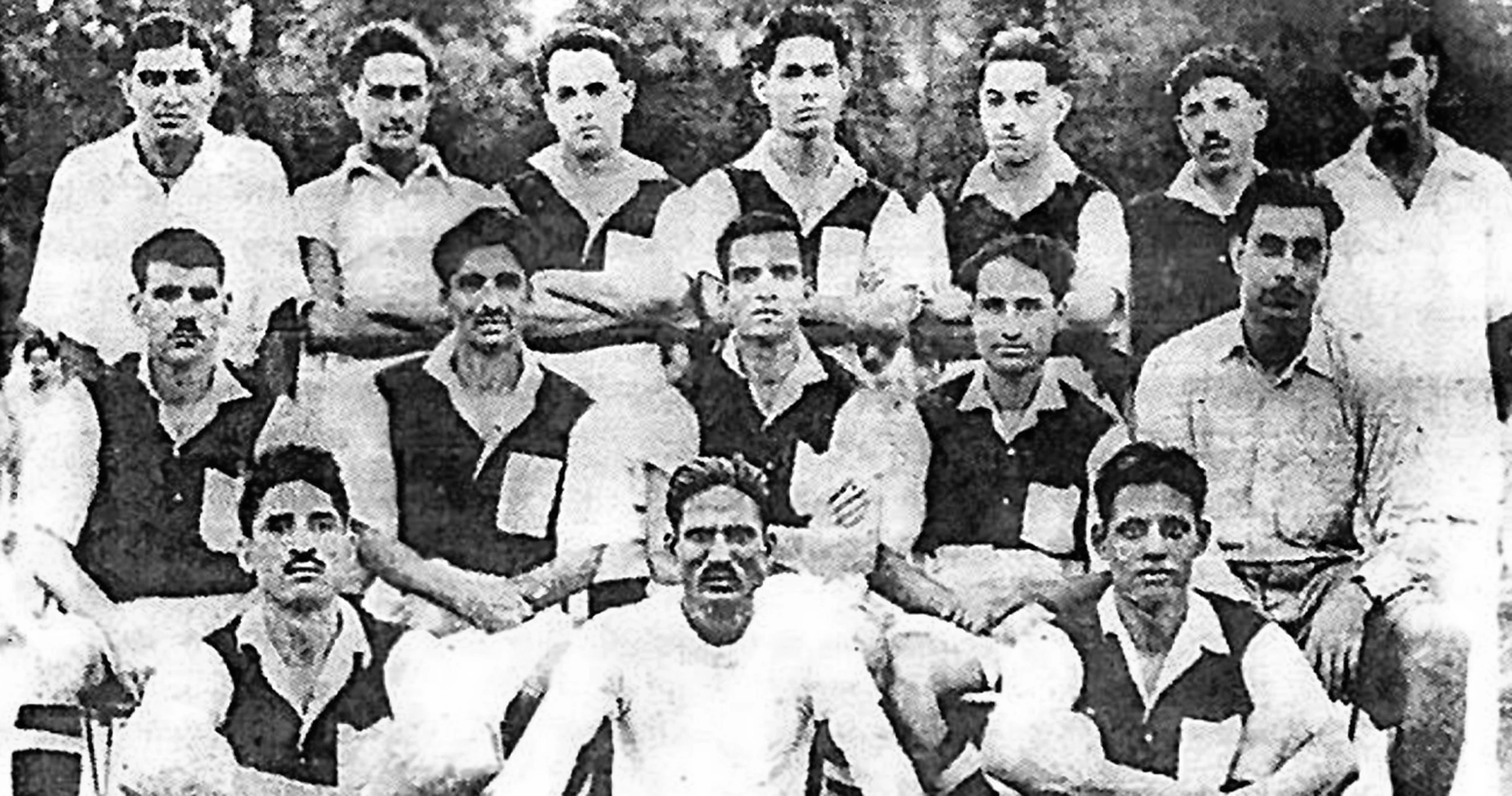
The 1940 League champions, Mohammedan Sporting. From left: (Standing) Mohammad Shafi Khan, Shahjahan, Noor Mohammad Jr., Taher, Taj Mohammad Sr., Bashir. (Sitting, middle row) Bachi Khan, Hafiz Rashid, Masoom, Saboo, Jumma Khan. (Sitting, lower row) Rashid Khan, Kalu Khan, Sirajuddin.
Rashid Ahmed (1916-1995), one of the key players of Mohammedan Sporting in the late-1930s and early-1940s, when they won the League seven times between 1934 (becoming the first native team to do so) and 1941.
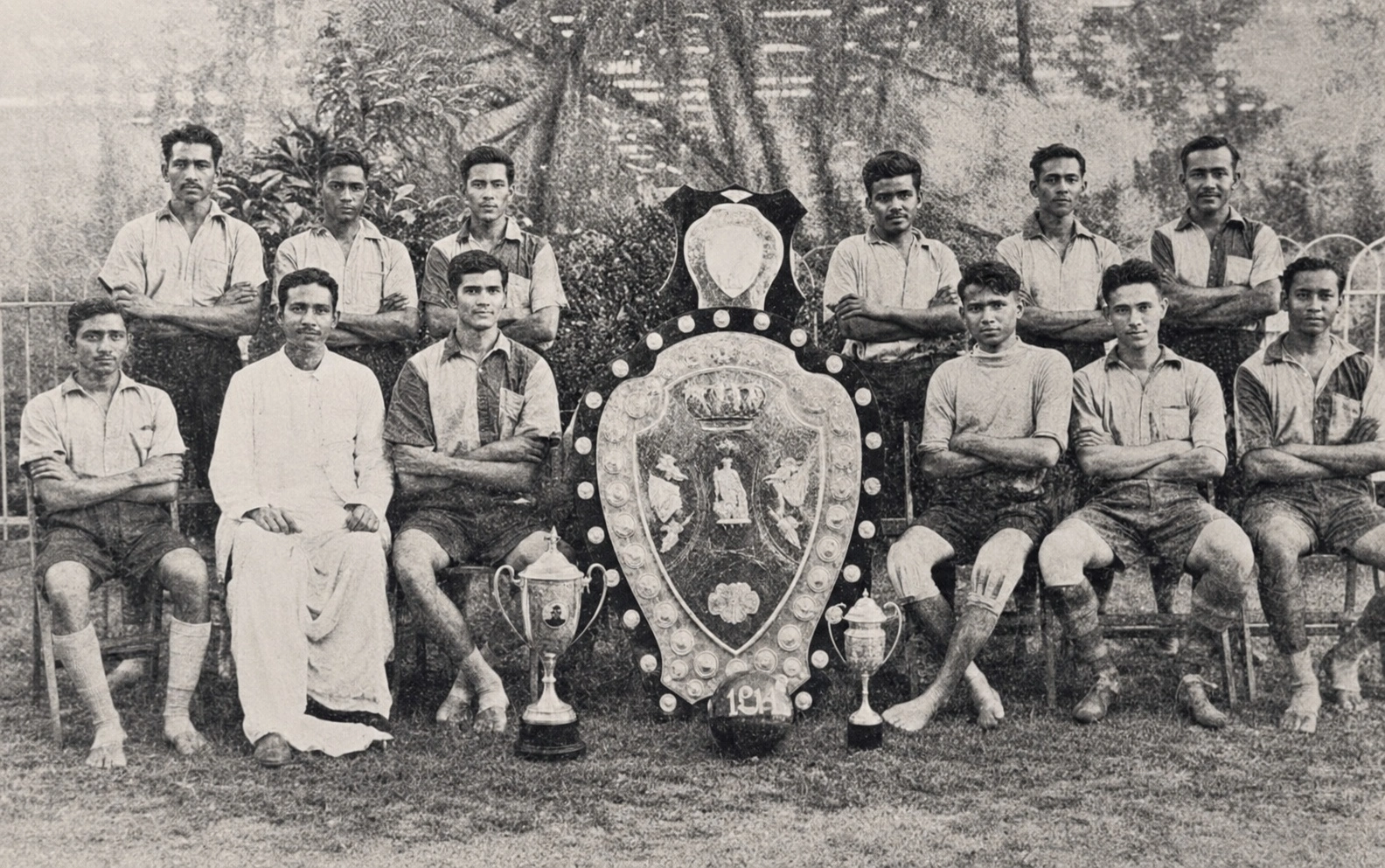
The 1945 East Bengal team after winning the ‘double’ (the Calcutta League and the IFA Shield) in Calcutta. Sitting 2nd from right is Fred Pugsley, a refugee who fled to Kolkata from Burma during World War II, and became East Bengal’s first-ever ‘foreign signing’. (Photo source: Jaydeep Basu of www.newsclick.in).
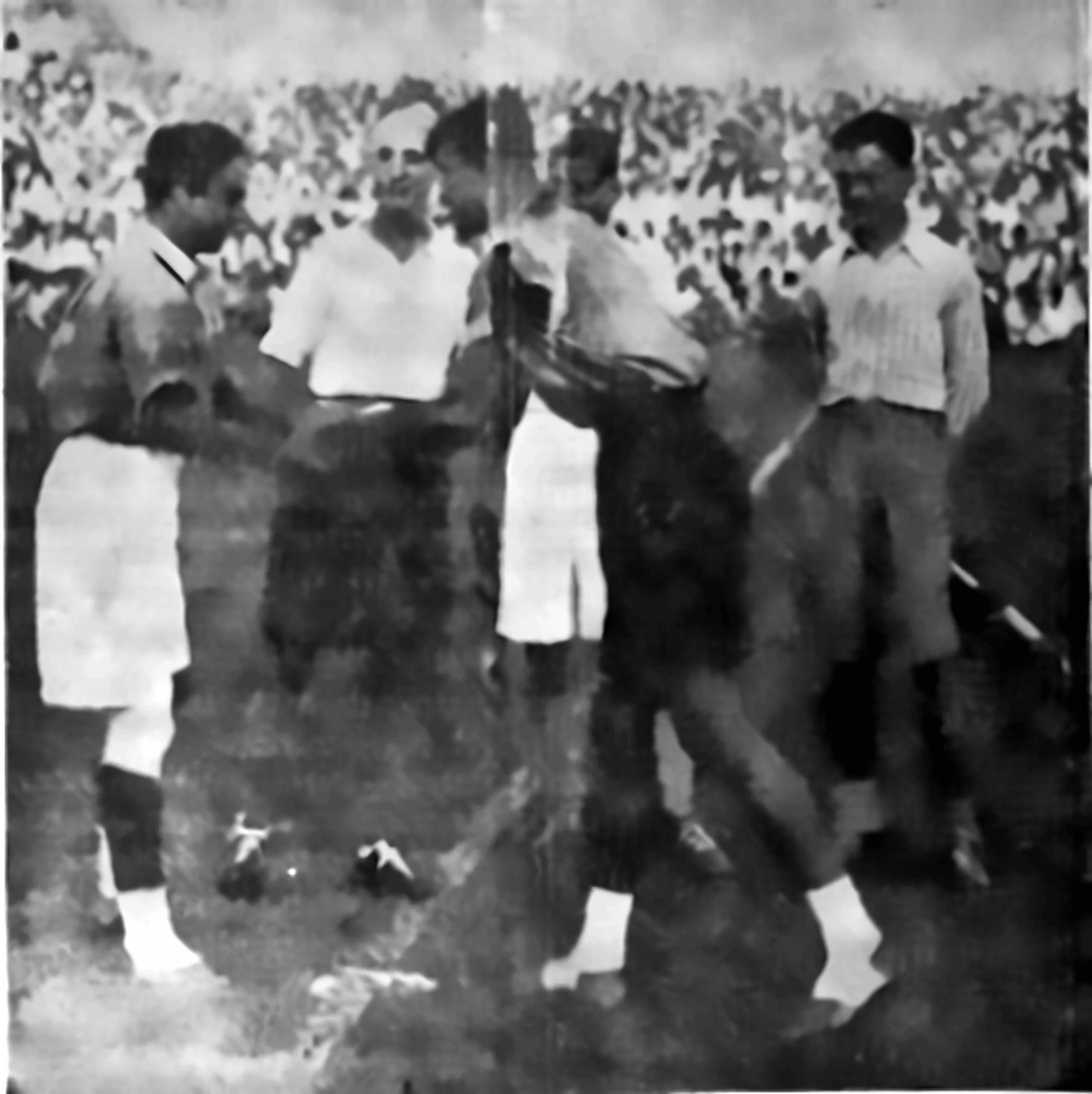
On 11 August 1945, East Bengal captain Paritosh Chakraborty and Mohun Bagan captain Anil Dey greet each other before the IFA Shield final. (Photo source: Jugantar Patrika, 12 August 1945, CC BY-SA 4.0, https://commons.wikimedia.org/w/index.php?curid=107545407)